As more people ditch their offices and fixed addresses in favor of a laptop and strong wifi signal, nomadic living is having a strong resurgence (from Paleolithic times we suppose). With this growing class, the creation of housing specifically for them makes a lot of sense. There are hotels like Zoku that appeal to the nomad set, but at around €125/night for one of their lofts, the prices, while not crazy might be steep for some. Also, if you fully embrace nomadicity, you’re going to want to have more than one address (right now there’s only one in Amsterdam). This relatively affordable, flexible, transcontinental living is what Roam is all about. For one monthly rent payment, you can get a room in one of their five locations around the world.
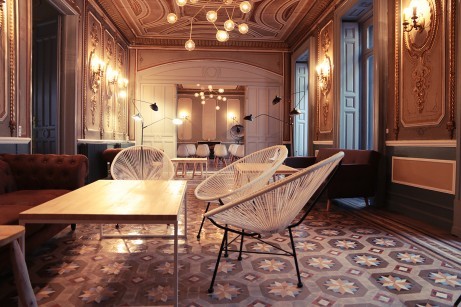
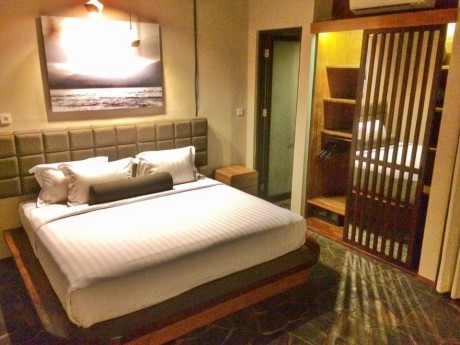
Roam charges $425 per week or $1,600 per month to access one of their co-living spaces. Right now, only location in Bali is up and running, but locations in Miami, Madrid, Buenos Aires and London are opening in the next three months. From what we can see, their furnished rooms are quite handsome and have slick communal spaces to meet fellow nomads. Of course super strong wifi signals are set up at each space.
Roam might sound a little like a hostel, but the rooms they show are decidedly more upscale. We also imagine it’d create more continuity as you might run into your “roommates” across the various locations. Roam seems like the perfect complement to experience-hungry, globalized, remote-working nomadic living.
With the advent of high speed information technology, facilitating near-instantaneous communications and transfers of information from any spot on the globe, a new breed of global citizen has emerged. Often dubbed the technomad, this person travels light and often, living and working wherever there is a solid wifi signal. The new long-stay hotel Zoku is trying to provide a home for this population. Opening this fall in Amsterdam, Zoku is trying to be more than a temporary place to stay–it’s trying to be a home, an office, a complete living environment for the “location-independent” worker.
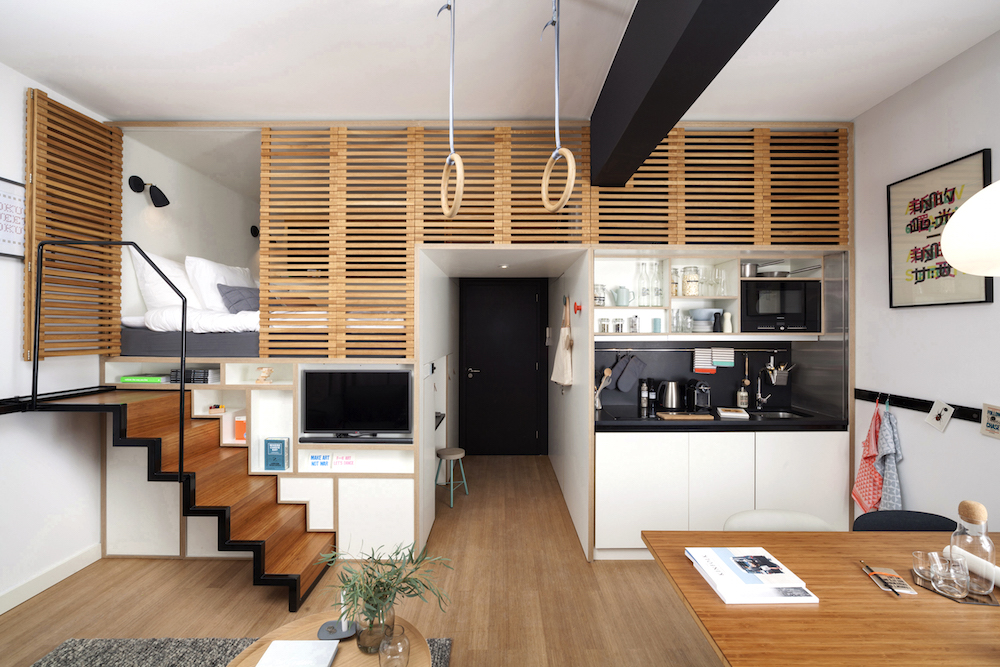
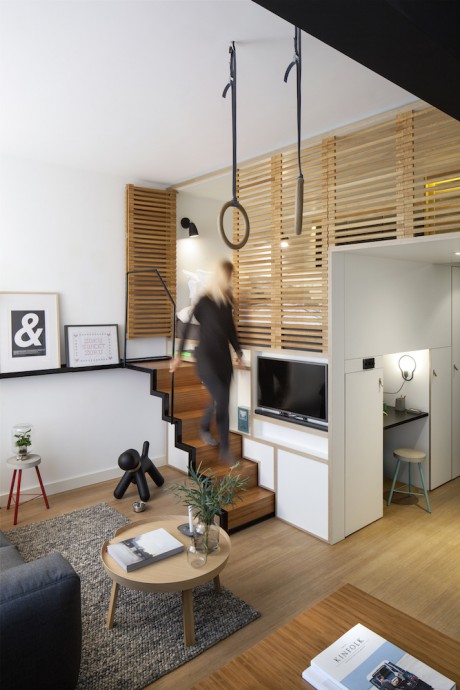
Zoku will have several levels of rooms starting with the basic Zoku bunk and Zoku room. However, their centerpiece is the Zoku loft (it’s also the only room they are offering pictures of at the moment). The loft is a full service apartment with elevated sleeping area, dining/conference table, kitchenette, lounge, enclave desk and a host of clever space saving features like retracting storage and stairs. With the loft, Zoku wants to shift the focus from the bed. Rather than mere place to sleep, the loft is a place to live. As such, the four-person table and sitting area–not the bed which is tucked out of the way–become the focal points of the room.
Rooms have a la carte services like access to a guest pantry, an “office toolbox” with a printer and other office-y stuff, an “art swapping” service that allows you to change out art to customize your room for your stay, laundry and much more.
Amenity spaces include a co-working space, meeting rooms, a bar, a 24 hour (almost) everything shop, gym, decompression room, game room and more. In fact, the amenity spaces look so inviting, I would probably hang out there most of the time and choose a more basic room.
Exact pricing has not been announced just yet, but a representative said rooms will be in the three to four star range, with longer stays enjoying a volume discount. Zoku will start booking in July, and the company says they plan to expand into other cities in the near future. Check out more on livezoku.com.
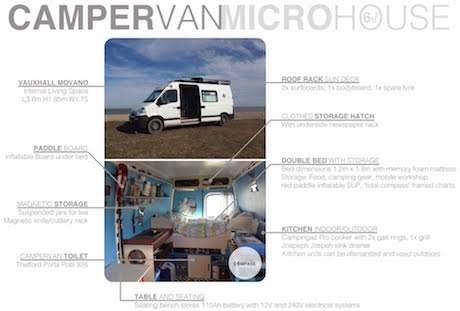
When’s the last time you had a good adventure? Seen new places, met new people, encountered new situations? For some, it might be a recent occurrence, but the rest of us are clearing out the cobwebs of our minds to recall an answer. Now imagine a life where adventure was a given–where your life was a succession of new experiences, new people, all punctuated by rewarding work. This latter life is the one William Thomson and his family appear to be living. This last March, the family of three put their lives in a camper van to tour the British coastline, running a business that makes special tidal flow charts for coastlines around the world.
The journey actually began with the charts, which were inspired by the misunderstandings that his parents and many others have about how tides work. Thomson told me, “My parents were paranoid the tide would drag us out to sea. My training with the RNLI [Royal National Lifeboat Institution, where he had previously volunteered] taught me this is not true: instead the tide will take you along the coast.” He wanted to create an alternative to the complicated nautical charts and tidal stream atlases that were the main educational resources available.
An architectural graduate, Thomson set about using his skills in design and the presentation of information to create simple images that convey tidal data, providing sea safety knowledge for swimmers, sailors, kayakers, paddle boarders, wind and kite surfers and scuba-divers.
Thomson had already made about 75 charts for various British locales when the idea occurred to him that he could visits the locations, selling the charts along the way. The remainder of the business he could run off his laptop and a wifi hotspot. The family sold their 1986 Land Rover Defender 90 and picked up a 2006 Vauxhall Movano van, spending a couple months converting its six meter interior into a livable space for his girlfriend, their six month old daughter and their water spaniel Alfie.
Thomson reports that life is not all fun and games–though it is largely fun and games. In one blog post, Thomson goes through a typical day, which involves around three hours of work in the morning. After work, there’s about six hours of hanging out outside–fishing, surfing, paddleboarding and the like–followed by another three hours of family time. Thomson also has a night shift after the baby is asleep.
Life does present some challenges, though none bigger than more conventional living situations. Until a recent addition of a water meter, they kept running out of water. Following the meter, they were better able to track and conserve, allowing the four of them to live on a scant 10 liters of water a day (the average American uses around 300-380 liters/day). They refill their 70 liter tank at their once-a-week paid campground visits.
William also told me their particular situation has a number of logistical considerations: “Finding somewhere to park where I have wifi to work, where we can wild camp without annoying someone, somewhere we can walk the dog, get into town to visit the galleries, and then find time to have some fun (surfing, swimming, paddle boarding). It does feel like a juggling act.” But overall he says he loves living simply in their camping style and consuming very few resources.
Thomson told us that they plan to keep on going until their daughter reaches school age, which isn’t for another four years. They have plans to chart the coasts Scandinavia, the US, Canada, New Zealand and Australia, and hope to visit/live in some of these places before settling down (at least for the school year. He sees summers spent on the road).
And if you’re wondering, like I was, what they’ll do when the weather turns cold, Thomson said they plan to head to Portugal, where the winters are mild.
Thomson said there are many benefits to their situations, “We’re outdoors all the time, we’re not wasting money on rent, our micro house is light, airy, with everything we need and nothing we don’t, the view from my design studio is always awesome and always changing, we’re visiting new places every day which is very exciting and the business is thriving!”
As a New Yorker, burdened as I am with our stereotypical New York-centricity, it kinda pains me to admit that Seattle is America’s micro-apartment capital. Seattle’s micro-apartment’s might lack the flash of NYC’s adAPT pilot program or the innovation behind Panoramic Interests‘ San Francisco develops. But what Seattle lacks in bling, it makes up for in volume. Whereas you could count the number of proper micro-apartment buildings in NYC and SF on your hands and toes, Seattle boasts at least 50 micro-apartment buildings and a couple more in the pipeline. Seattle has created a type of micro-apartments that is low-frills, furnished, affordable and almost always located close to transit hubs. Though perhaps not much more than glorified boarding houses, we see them as promoting simple, thrifty, car-free living.
But for all the publicity Seattle micros have received, there have been few reports as to what it’s like to actually live in one of these micro-apartments. A couple months ago, Nicole Hennig reached out to us with exactly that. She lives in one Seattle’s many micro-apartments (more specifically a building by Footprint Properties) and she gives us a pretty great account to what it’s like to live in one.
Hennig is not necessarily the stereotypical micro-apartment dweller, who she says are mostly people in their 20s in the building where she lives. After leaving her job of 14 years at MIT at the beginning of 2013, Hennig, a self-described Baby Boomer, started her own business helping librarians and educators find and use the best mobile technologies for education. Because all of her work is done online, she decided to spend a few years exploring living in different locations. Much of last year was spent in Oaxaca, Mexico and she has spent this year bouncing between different Airbnb properties along the West Coast.
She came to Seattle in part to live in a micro-apartment. “I had been following the ‘tiny house’ movement for quite a while,” she wrote to us. “But I prefer urban areas to rural, and it seems most tiny houses need to be located in small towns or rural areas. So that fact that micro-apartments exist, usually in walkable neighborhoods of big cites–that sounded perfect to me! (and it is).”
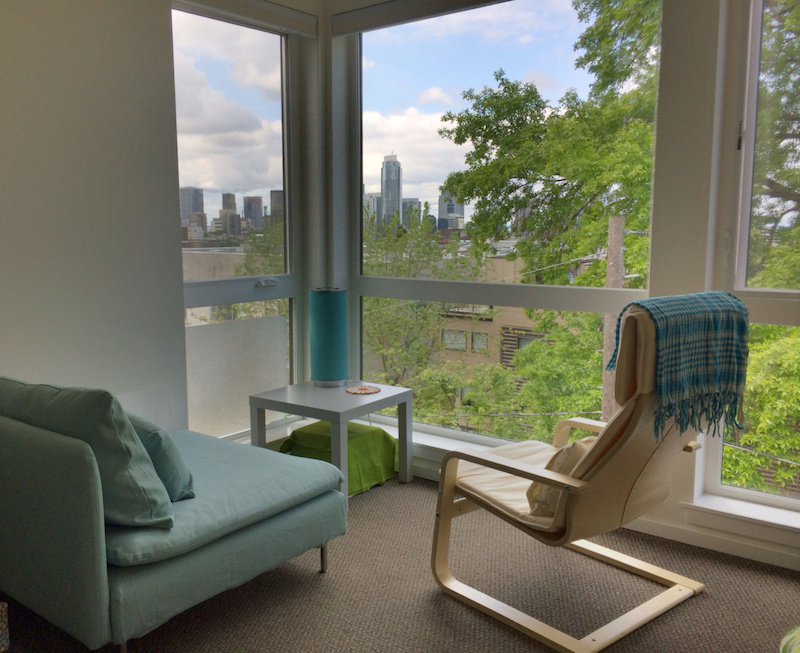
She looked around at various micro-apartments in Seattle–many of which she found too tiny and depressing–before finding her current place in the Capitol Hill neighborhood. The apartment is roughly 300 sq ft with floor-to-ceiling windows that have a view of Seattle’s skyline. “The great view makes my tiny space feel big,” she told us.
The apartment costs $1000/month, which includes basic furniture, Internet, and all utilities. That includes a $50/month premium to have a six month lease. While not dirt cheap relative to other places in the neighborhood, she sees many perks. She wrote, “I could have found a much larger, full studio apartment in the same neighborhood for $1,200, but I would have had to pay extra for utilities and Internet, buy more furniture, and commit to a year-long lease.”
“The best part of living in this micro-apartment,” she writes, “Is that it makes living in what is normally an expensive neighborhood affordable, by cutting back on space. Space is the thing I care least about since I have very few possessions.”
Hennig is a poster child for lightweight living. She writes, “I prefer experiences to things and I like working for myself. I’d rather rent than own practically everything in my life. I’ve owned thousands of books over the years and now I’m happy to only have e-books. I don’t own any more music or movies, preferring Pandora and Netflix. If I need a car, I use Zipcar, Car2Go, or I get a ride from Sidecar, Uber, or Lyft. When I was in Portland I rented a bike from a local person for the whole six weeks I was there, using Spinlister (for a much cheaper price than a bike shop rental).”
Of the building itself, she doesn’t report much in the way of community spirit, saying that, like most city-dwellers, most residents keep to themselves. And though there are communal kitchens in her building, she rarely sees anyone in them. She prepares her food in her apartment, mostly using a little rice-cooker/veggie steamer, and a small travel blender, as well as occasionally ordering out from the bevy of great, cheap takeout places nearby.
“People do use the roof deck one level above me,” she writes. “There are chairs and grills for cooking out. I met a few people from the building on the 4th of July when I got home from a party–everyone went up to view the fireworks from the roof.”
While this sort of minimal living might seem to discourage feeling grounded and tending longterm relationships, she says the opposite is true. “I consider my home to be wherever I am. It’s very easy to keep in touch with my closest friends and family in Boston, Vermont, and San Francisco, and eventually I’ll probably build one more community of friends somewhere. Then I will float between them at different times of year. I collaborate online with others on some of my work projects, so I never feel isolated in my work life. In each location I’ve met friends of friends to hang out with and I always end up getting invited to holiday celebrations, bike rides, tours of the city by locals who like to show off their city, and so on. I also become a regular at the various coffee shops where I work and chat with the employees there.”
“Overall, I would say that a micro-apartment is perfect for my nomadic life, making it affordable and convenient to live in a great urban neighborhood for the nice-weather part of the year,” Hennig writes. “I love my view, and my neighborhood and I love having few possessions. When it’s time to move, I’ll probably hire a Task Rabbit to come get the few furniture and household items I purchased to use while I’m here and sell them on Craigslist for me. I’ll probably pack of a box of a few items and mail it to myself for use in my next six-month rental–or I’ll just have him sell all of it for me and go back to staying in furnished Airbnb rentals for a while, I’m not sure. I might use this ‘closet in the cloud’ service [MakeSpace Air] I heard about recently to store a few things until I find the next apartment.”
In many ways, Hennig embodies a sea-change in terms of how people can live. She forgoes space for location, she uses technology to both reduce her possessions and professional location dependence. It’s a lighter, less encumbered, simpler lifestyle–one that we think will be far more common in the near future. Read more about Hennig’s life on her blog Location Flexible Life.
For most of the 2.5 million or so years humans have been around, we have been nomads. Humans were tethered to the meanderings and vicissitudes of herds, flocks, the availability of foraged edibles and climatic shifts. People traveled, ate and lived light. Then around 10K years ago, there was an agricultural revolution. People started making land produce food that exceeded subsistence levels. People stopped moving so much. They built houses close to their crops. They created surpluses of food and some people started making stuff other than food. Those non-food producers needed a place to live, so they made villages. Those villages became cities. The cities became so crowded humans made suburbs. Surpluses became so great we made Costco…and so on.
Given that we humans spent 2,490,000 of our evolution wandering about and a mere 10K staying put, it’s not a huge mental leap to think some of our biological default settings are set to nomad. This ostensible (though far from verified) biological disposition would explain quite a bit about people like Foster Huntington.
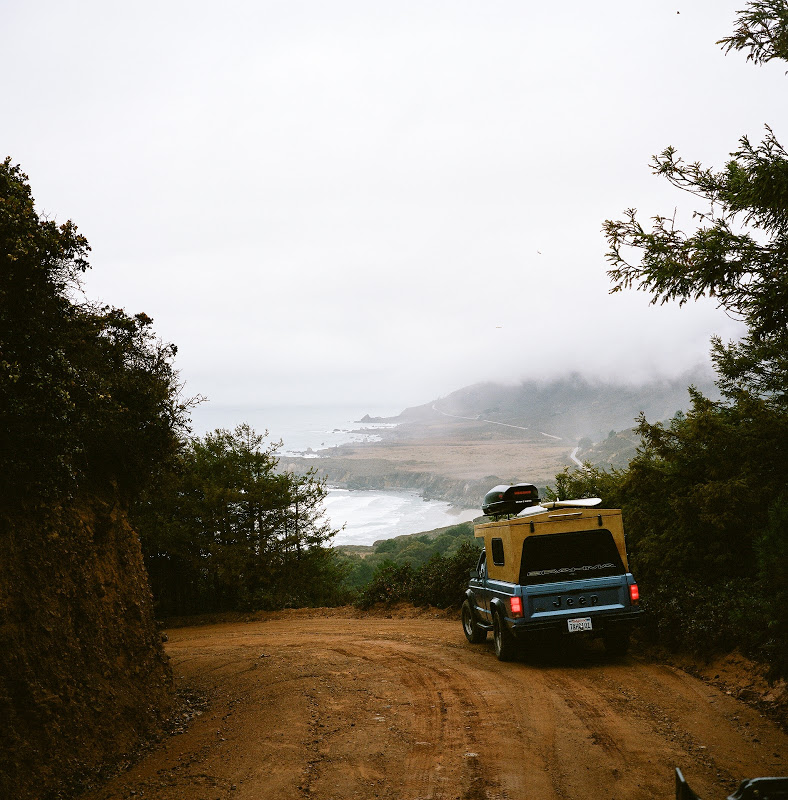
In 2011, Huntington was working as a designer for Ralph Lauren in New York City. He decided to leave his job. He bought a camper van and has been traveling ever since. He has supported himself by writing a couple books, “Home is Where You Park It,” and “The Burning House: What Would You Take?“–both espousing the benefits of lightweight, nomadic living (the latter sharing a theme I wrote about on this site). According to Business Insider, he and some of his cadres have even created a business converting vans and buses into living spaces.
Huntington is a prolific Instagrammer, and his feed shows a life of intense and idyllic leisure, replete with beaches, gorgeous vistas, impromptu camping, snowboarding and surf trips. There are many pics of his and his cronies’ van, car and bus-based “homes.” He appears to be currently stationed with in some paradisiacal treehouse with a bunch of his buddies.
Just to save you some energy, we will preempt your critique that Huntington is young and single, and this type of living is not feasible for families. As we’ve seen on this site, families can and do live nomadically, though admittedly it’s probably more challenging. And yes, most careers wouldn’t accommodate this way of life. And sure, the 100K miles Huntington has driven leaves a carbon footprint, but we suspect it’s much smaller than heating, cooling and operating most homes, not to mention most people drive almost that much in their day-to-day lives.
If you put aside the critiques, I think Huntington shows that the good life need not be a heavily loaded one. He shows that by paring things down to the barest of essentials (a requirement for living in such a dinky space), you don’t need a lot to get by. And all that time spent maintaining our lives’ structures (the homes, the stuff, the careers) might be spent enjoying things far less serious and far more fun. And he shows that we can choose how we want to live, even when it seems like that choice might have already been made for us.
Each week we are profiling real people who are editing their lives for more freedom and happiness. This week we hear from Mike, whose self-described pipe dream of living on the road with his family became a way of life. (If you have a story you’d like to share about your own life edit, email david@lifeedited.com)
Tell us about yourself.
I’m Michael Boyink. I am 45 years old. I am a web developer, teacher, and writer. I’ve been married to my wife for 21 years and have a 15 year old son and 14 year old daughter.
What makes your life an ‘edited’ one?
We had a pretty typical conservative homeschooler life going on. I have been self-employed for over ten years, and we had the house in the suburbs, the toy cars, and the routine.
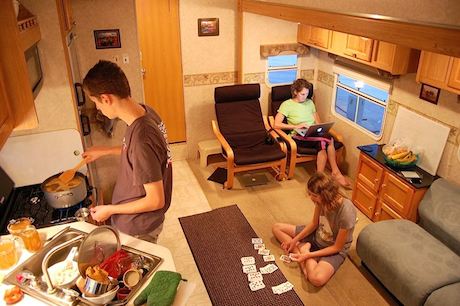
At some point it occurred to us that between homeschooling and internet-based work our life was portable and we just weren’t taking advantage of it. We developed a “pipe dream” of a long RV-based road trip and talked it about it for a few years. Then my oldest turned 13 and we realized that if we didn’t do it soon we never would.
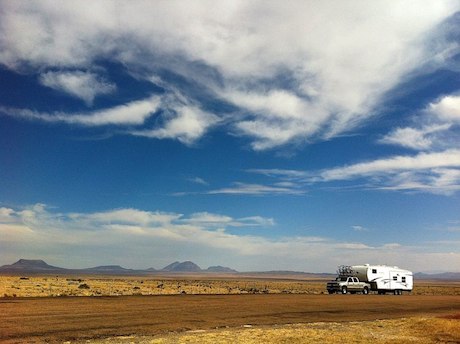
After roughly nine months of planning and prepping we set up a friend in our house and left in a truck and fifth wheel trailer with the intent to travel the US for a year.
About halfway through the year we realized we couldn’t see it all, and were having so much fun that we didn’t want to stop. So we finished out the year, returned home, and spent six months getting caught up on business and purging our belongings. We then sold our house, gave away what remained of our stuff, and hit the road again in May of 2012.
How long have you been living this way, and do see yourself continuing to live this way?
We’ve been on the road for roughly 18 months of the last two years. We will continue to live this way so long as it makes sense, but have no set plans or date to quit.
What are the biggest advantages of living this way?
By selling the house we became totally debt-free, so can now use our income to purchase experiences rather than paying off stuff. We’ve ridden horses in the Smokey Mountains, rented a houseboat for week on the Mississippi, and herded Alpacas in Texas. So much more fun than paying a mortgage…
What are the biggest challenges?
Decision fatigue. With the world almost literally at our fingertips deciding where to go and what to do is really hard sometimes. No matter what we choose it seems like there was probably a better choice or better adventure to be had.
Community can also be tough. It’s hard to develop deep friendships when you are constantly moving.
How has this lifestyle affected the other members ofyour family?
Our immediate family has grown closer. It’s almost impossible not to when you are all in a 30′ box that wiggles when someone rolls over in bed. We also dealt with puberty while in this mode–and it was easier since there is no room for elephants.
What is the number one suggestion you’d give to someone looking edit their lives?
Quit living the formulas others have created for you, figure out what life on your terms can be, and just do it. It’s a cliche but life really is too short.
What item(s) have made your lifestyle easier?
Definitely technology – iPhones, travel apps, Macbook Airs, GPS units. Also development of a personal uniform, which simplifies laundry and day to day dressing decisions.
Do you have any design or architectural suggestions derived fromyour lifestyle?
I’m surprised I couldn’t find anyone selling a wardrobe as a system, only pieces and parts that the end user must make sense of. I’d love to see someone develop a retail store that would sell a complete soup-to-nuts wardrobe that was based on lifestyle and job requirements, and all work together, layer, and coordinate.
Last week, we showed a family living an edited rural life, showing that densely-packed, tiny-apartmented cities aren’t the only environments that support pared-down living. We ran across another version of this way of life that is neither urban, suburban, rural or any of the above: it’s mobile.
images via liveworkdream.com
In 2007, René Agredano and Jim Nelson, inspired by their dog’s diagnosis of bone cancer, quit their corporate jobs, sold their home and most of their possessions, bought a truck and an RV trailer and hit the road with Jerry, their sick doggy to evaluate their lives. After realizing they could support themselves from the road through a combination of online businesses, freelance work and some labor, the trip, meant as a sabbatical, became a lifestyle. They have been going at it for 5+ years with no plan to stop.
We shot René a few questions via email regarding their lifestyle–asking about things like the pros/cons of RV living, their carbon footprint and what landlubbers might learn from their perambulating lifestyle.
LE: What is the best part of your lifestyle?
René Agredano: We can sum up the best part of our lifestyle in one word: Freedom. We have the freedom to live as we wish, work where we want and when we want. Being location independent entrepreneurs gives us the flexibility to go where the weather’s nice and experience all that this great big world has to offer, without sacrificing our need to earn an income.
LE: What is the worst part?
RA: Dealing with the unexpected. When you’re stationery, life is broken up into a series of predictable routines that rarely vary. But when your scenery changes throughout the year, unexpected challenges are always around the corner and there’s a big learning curve in discovering how to cope with them.
Unexpected events ranging from mechanical failures with your rig, to severe weather situations you’ve never experienced before, to something as simple as navigating your way through a new grocery store layout. All of these things challenge your ability to think on your feet and be positive while encountering the unknown.
LE: Can you say something about rising gas prices?
RA: We’re glad we have a diesel pickup and a relatively small fifth wheel trailer (24′ feet), which helps to keep our fuel bill down. And as fuel prices go up, our lifestyle gives us the ability to choose how much or how little we want to drive, unlike people who are tied down by a daily commute or suburban lifestyle.
Rising prices used to scare us, and they really hurt at the pump when we have to swipe our debit card twice! But since we’ve carefully track all of our expenses over the last 5 years, we’ve discovered that on average, we spend less than $400 a month on fuel, which probably less than what the average commuter spends driving to and from work each month.
Also, while we might travel longer distances in one shot while getting from Point A to Point B, we still drive much less frequently than most people. Once we’re in one location, we do little driving other than to the grocery store or sightseeing because we work from our rig.
LE: How do you view the issue of sustainability and your lifestyle? We saw on your blog that something about using bio-diesel. Can you say more about that?
RA: We’re from Northern California, where being an environmentalist is the de facto way of life. Before we started traveling, we were avid backpackers. Whenever we saw a big RV hauling down Highway 101, we would scoff and think “gas hog!” But now that we became one of them, we’ve realized that’s not the case for fulltimers anyhow. If someone is full-timing in their RV, even the biggest 40′ rigs have a smaller carbon footprint than the traditional lifestyle of living in a house or even a small apartment.
For example, as RVers who choose to boondock (forego standard electric, water and sewer hookups) most of the time, we are living off-grid in remote areas with solar power and satellite internet service. By not staying in RV parks unless the weather is exceptionally cold or hot, we’re not consuming a whole lot of resources. Also, we don’t consume stuff on the same level as most people, because with less space we just can’t stock up or buy things on a regular basis. We live in about 100 square feet! Whenever anything new comes into the rig, something has to go to make it fit.
One of the reasons we bought our Dodge Ram diesel pickup, was so that we could make and run biodiesel in it (a mix of veggie & diesel), or eventually convert it to run on waste vegetable oil (WVO). But the practicalities of making our own fuel have eluded us, and these days, finding anyone selling biodiesel is like a needle in a haystack. The industry has just tanked because of the bad rap the palm oil industry has received (there is debate about the ethics of harvesting these trees for fuel instead of using that land for food) and it’s really sad to see. We’re still petroleum-slaves, I hate it.
LE: Do you have a storage unit or did you really get rid of everything that couldn’t fit in you trailer?
RA: When we first hit the road, the plan was to do it for one year, then settle down and get back to “the real world” again. We sold off most of what we owned but kept got a small storage unit for things we didn’t want to have to re-purchase, like basic furniture, as well as some sentimental things. Well, one year turned into two and when we finally returned to that storage unit, we saw that we didn’t get rid of as much stuff as we thought we did. It was scary to realize that our mindset about downsizing was so different when we first hit the road. After living in a tiny space for two consecutive years, now we realize how very little we need to be happy, and it comes down to less than 1/4 of what we left in that unit!
One of our lifetime goals was to own some property, so today we own a very nice paid-for RV site on 5 acres in the Colorado Rockies. It also happens to come with a guest cabin for our visiting friends! But the cabin is off-line and not using any resources for about 10 out of 12 months. We only go there occasionally, since we still love traveling too much.
LE: How long do you plan to continue?
RA: Indefinitely! We’re having too much fun to even think about hanging up our keys.
LE: Any living strategies you can lend the non-mobile?
RA: Yes! Whether you enjoy life on the road or in a stick house, the key to living simply and being happy is to remain debt free. Living unburdened by monthly payments allows you so much more freedom. You can enjoy life to the fullest, be prepared for unexpected expenses and not live in fear of losing your job because you have so many bills to pay. Ever since we became debt free, we aren’t working just to pay bills…we have more time to to pursue our hobbies and interests that may not pay a lot of money, but make us fulfilled, like the Tripawds.com community we founded for canine amputees and their humans!
But when it comes down to it, as Dave Ramsey says, debt is a symptom of insufficient income. We have learned that the best solution to staying financially solvent and able to pursue our passions is to diversify our revenue streams and focus on earning passive, ongoing income. Instead of relying one one business for all of our earnings, we have several different endeavors that each bring in revenue streams each month. Cumulatively they all add up and we’ll never go back to a traditional small business structure again. We believe this is one of the best ways to protect ourselves against economic catastrophe, so now our mission is to help others do the same, through our remote home-based business ebook (www.bit.ly/incomeanywhere) and free coaching at Agreda.com.