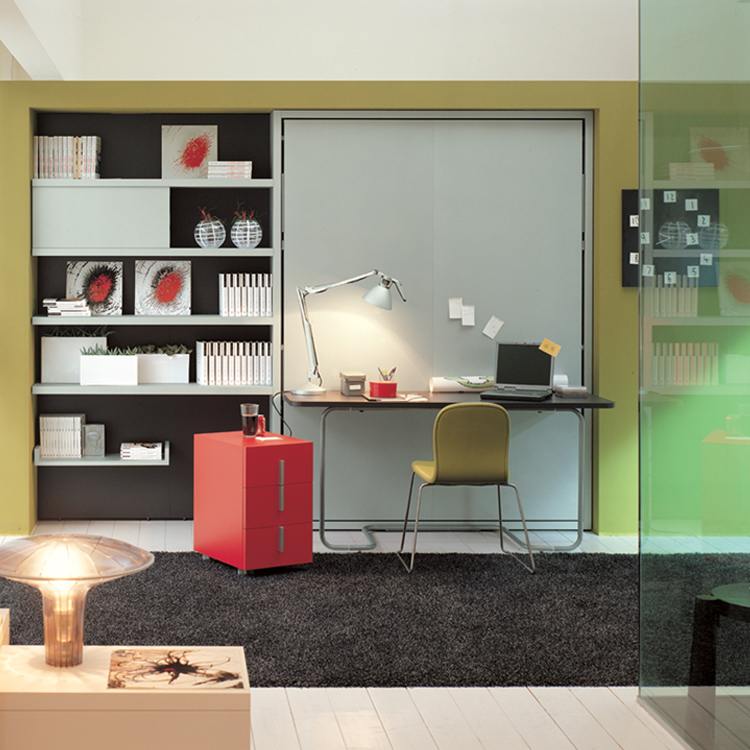
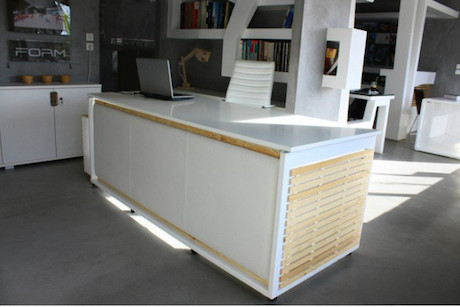
Minimalist Home Office Set Up

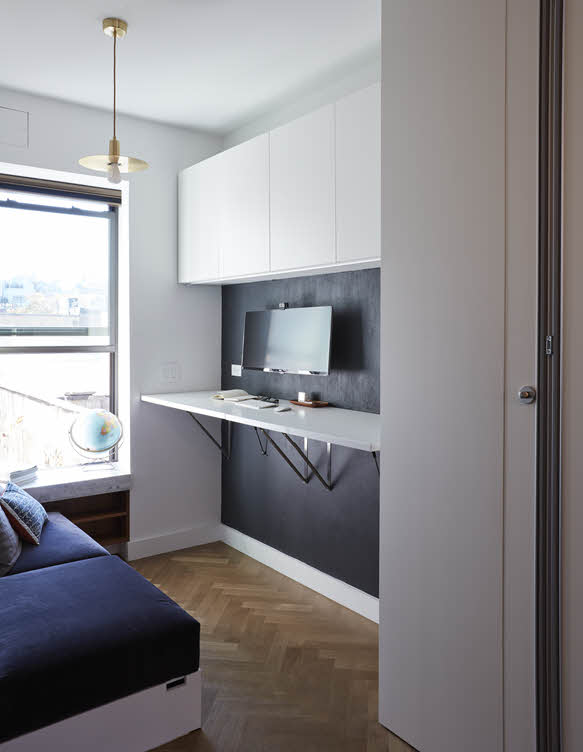
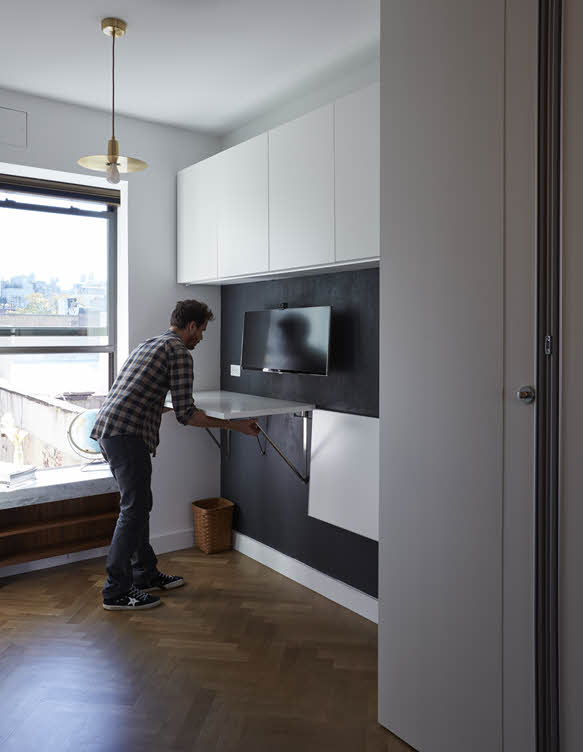
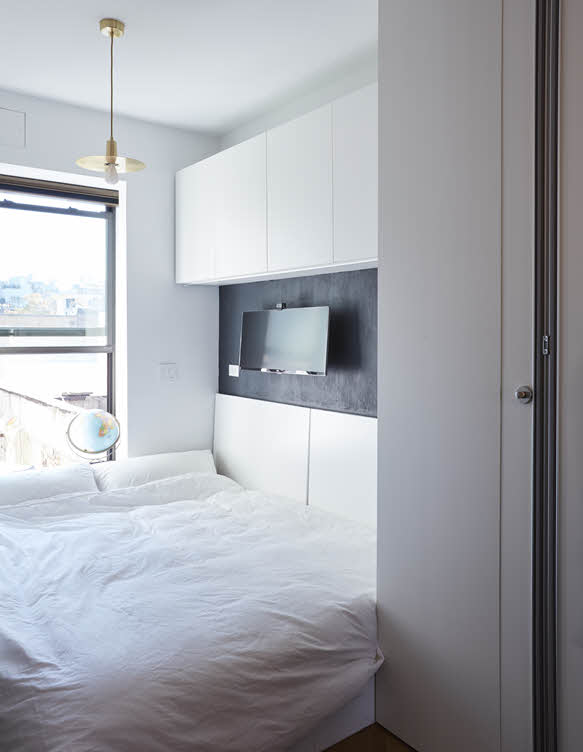
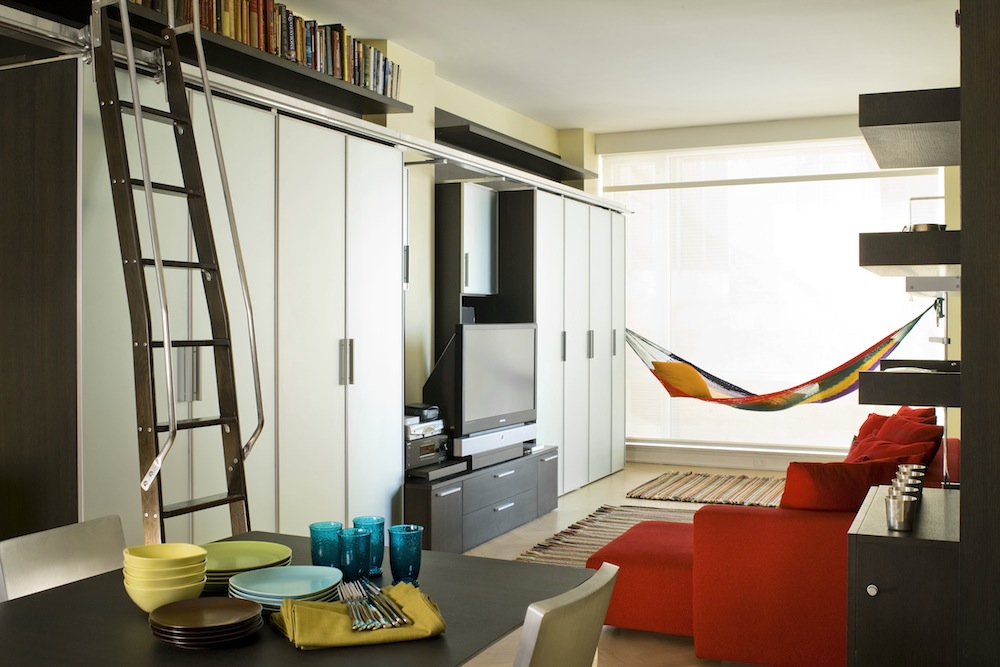
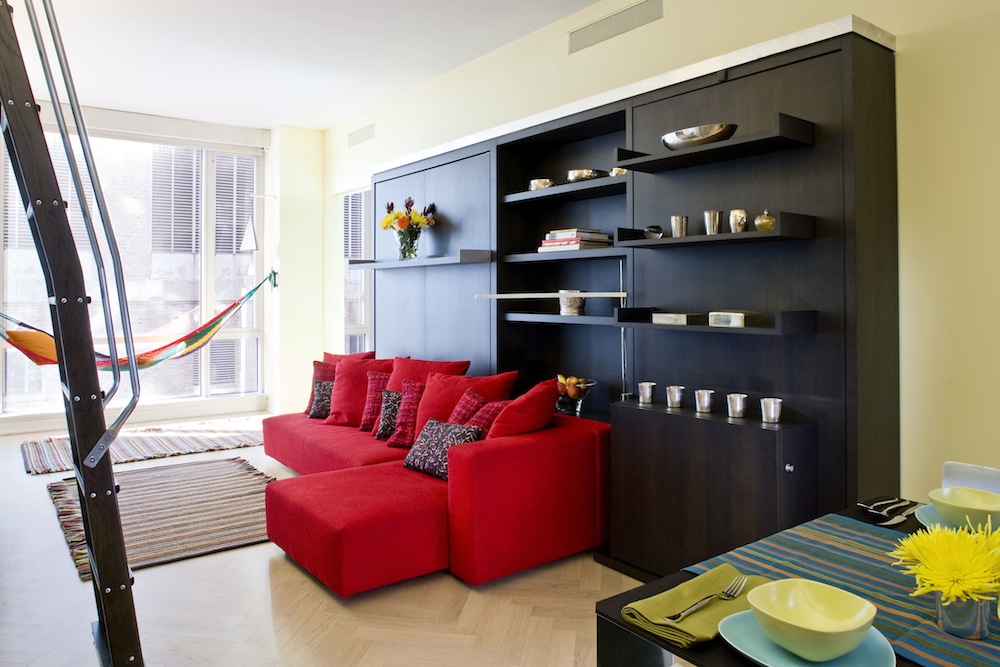
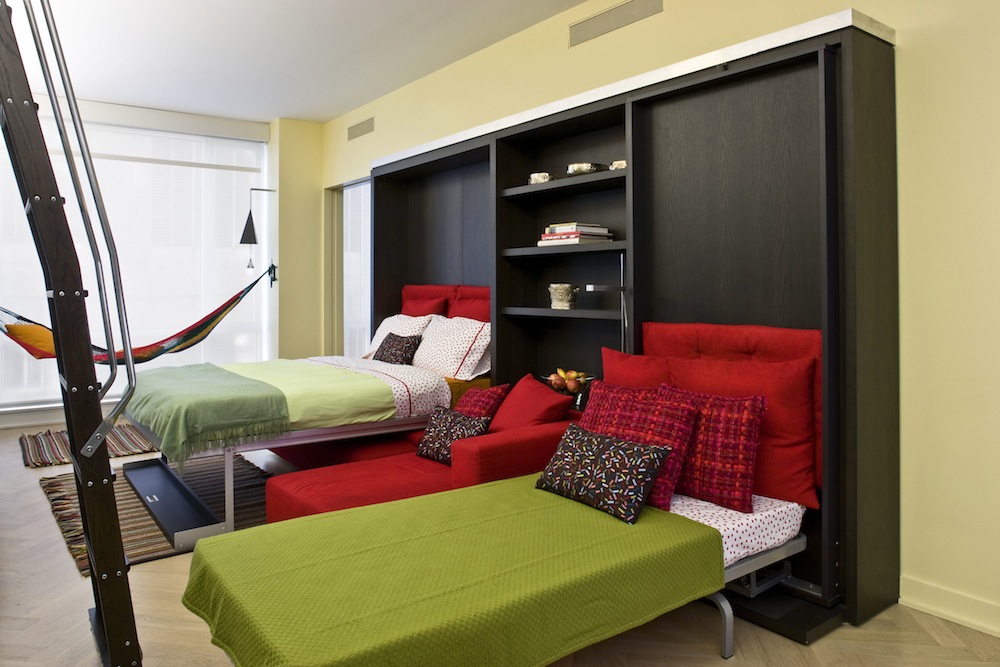
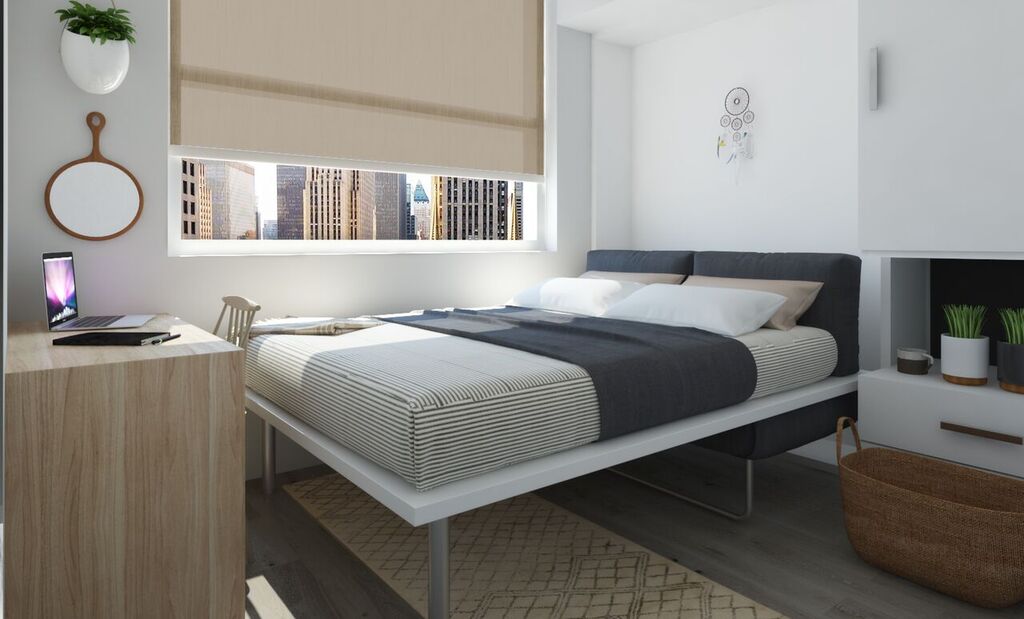
The LifeEdited 2 home office / guest bedroom is a classic in space efficiency. Apartment dwellers can work at a large stand-up desk with a 34-inch screen and two guests can sleep comfortably, all in one room that is just a bit bigger than a queen-sized bed.

What we used:

  • LG 34UM95 34” wall-mounted monitor
  • Wireless keyboard and mouse
  • MacBook & printer in the closet, connected via hidden cables running through the wall
  • LifeEdited-designed moveable sofa segments that assemble into a guest bed
  • New Concept Table from Resource Furniture (two of these, they fold down)

What we like:

  • It’s a potent home office
  • It has a minimalist feel to it — the messy bits are in the closet
  • Transformation to guest mode is pretty quick

Alternatives:

  • That 34” screen is *really* nice, but a 24” could also work well
  • You could wall-mount an all-in-one computer e.g. an iMac or curved HP Envy

This post is one in a series that describes our LifeEdited 2 showcase apartment. LifeEdited 2 embodies our green, space efficient, and minimalist principles. We view LifeEdited 2 as a lab for experiencing things that are consistent with these principles. The fold-down table described in this post was given to us, which we appreciate, but we would not have accepted if we didn’t believe in it.

A Village in a Tower

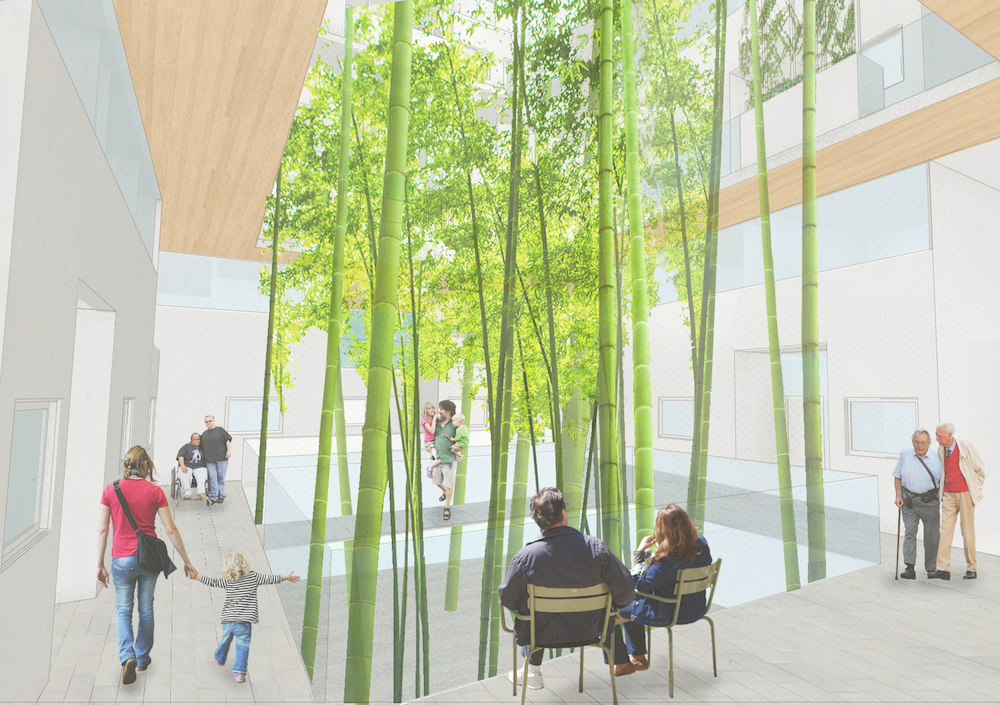
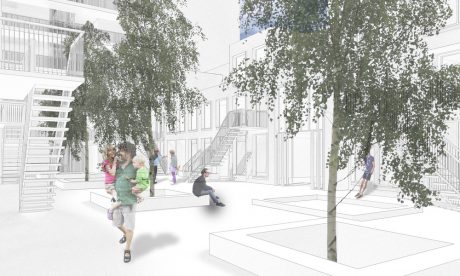
Bamboo plants in inside courtyard

Image above by Rachel Kao.

While Europeans are no strangers to communal, urban living, evidenced by things like Baugruppen, the phenomenon is still pretty rare in North America. Cohousing, the most established form or communal living this side of the pond, tends to be located in the burbs. In these communities, several single family houses band together to create a cohesive community with regular shared activities and spaces. There are some urban exceptions such as Durham Central Park Coho. But developing a building like Durham Coho is a time and resource intensive affair. Now a group out of Vancouver calling themselves “Our Urban Village” has come up with a clever middle ground approach to creating communal living in the city. Rather than developing their own building, they’re seeking to graft their community onto an existing development.

The group calls their concept “”co-housing lite”. Rather than originating the development, the group would commit to buying several units at market value (~C$700/sq ft at the moment) of an in-progress condo building. This influx of cash would give the developer investment capital as well as cost savings down the road as pre-sale and marketing expenses would be minimized. In return, the developer would build common spaces such as shared dining and guest rooms for the community. While these added features might seem like a big hit for the developer, co-founding member James Chamberlain told the Globe and Mail that developers see the expense as fairly small relative to the overall costs of developing the large buildings their interested in.
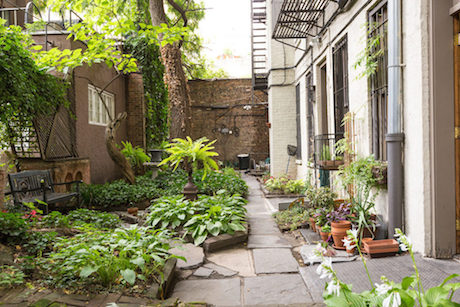
Morgan_McDonagh_Social Street

The community is being smart with design of those common spaces. Another member, Kathy Sayers, wrote that OUV “will be working with a German architect and Resource Furniture to design our common space to make 1200 square feet work for our 20-30 families instead of the average 2000-2500 square feet.” That same architect, Inge Roecker, is an associate professor at the University of British Columbia and gave her students the task of concepting the community. Ultimately, we suspect, the look of the spaces will be largely dictated by the building’s preexisting architecture. 

The group is presently courting a number of Vancouver developers. Because of their unconventional approach, Chamberlain said the ideal developer will be one with a “social conscience”.

The community wants to be multigenerational and their current membership of nine represents several demographics including singles and couples with and without kids. They’re shooting for 15-30 households total for the community. Before you become a member, OUV has a three month getting-to-know-you period to weed out people who might not be into the sometimes involved nature of cohousing. When that period is over, members pay a C$500 membership fee and are responsible for paying for their units.

While designing a building from scratch to facilitate a shared living experience is perhaps ideal, many people with jobs don’t have the time to commit to such an undertaking. Co-housing lite provides people interested in this way of life, ones who don’t want to live in single family housing, a way to create their community without the burden of being amateur real estate developers.

If you’re interested in learning more or becoming part of OUV, check out their website.

NYC’s First Micro-Apartment Building is (Almost) Ready to Rock

A few years ago, New York’s adAPT NYC competition drummed up a ton of public interest in micro-living. Spearheaded by the Bloomberg administration and HPD, the design and development competition sought out the world’s smartest designed, urban micro-apartments, allowing competitors to design smaller than the city’s current 400 sq ft minimum building requirement. The winner of the competition—a team lead by Monadnock Construction with a building designed by nArchitects–was announced in January of 2013 to much fanfare. Everyone was ready to move into their awesome micro-apartment in the heart of America’s biggest city. But the world of real estate is more tortoise than hare due to the intrinsic financial, technical and bureaucratic challenges of building a multi-story, multi-unit structure in a city center. But three years down the road, the tortoise is about the cross the finish line. Leasing starts today for Carmel Place (née My Micro).

As we looked at earlier this year, all of the units were prefabricated in the Brooklyn Navy Yard then trucked over the Manhattan bridge to the Kip’s Bay neighborhood of Manhattan. The units were stacked into place after which the rest of the building was assembled–hallways, facade, utilities, etc. In addition to the private units, there are several communal spaces including a roof deck, courtyard, a lounge with a pool table and tv and a gym.

Monadnock hooked up with Ollie, a company we looked at earlier this year, to fit out eight of the twelve market rate furnished apartments that start leasing today. In addition to a number of conventional furnishings like desks and chairs, Ollie is using sofa-beds from Resource Furniture to make sure the apartments use every inch of their available floor space (units range from 265-323 sq ft). For those looking for some decorating help, Ollie is even offering an option they call the “Ollie Box”, which includes things like throw pillows, rugs and table lamps. Ollie also wants to provide a low-fuss living experience, managing several tenant services such as wifi, cable, housekeeping, and weekly visits from a Hello Alfred home manager, a service that helps take care of mundane chores and errands like keeping groceries stocked in the pantry and fridge and making sure the laundry and dry cleaning get dropped off, picked up and properly put away. Additionally, Ollie tenants will also get a Magnises membership, a social programming service to foster an esprit de communité (all included in the rent).

Speaking of rents, they will range from $2540 to $2910 with floor number and unit size determining price. Furnished apartment will also command a $160/month premium according to the NY Times. In absolute terms, this is a ton of money, but in New York City terms, sad as it is to say, it’s not. Median rent for a comparable apartment is $2550, and while that apartment might be larger than one of Carmel Place’s, I assure you it will not look or perform half as well, nor will it include the bevy of included services.

It should also be noted that 14 of the units are designated for affordable housing with rents around $950. But don’t stop scouring Craigslist just yet. 60K applications (not a typo) have been submitted for those units. Winners will be chosen by lottery. Eight furnished apartments will be rented to formerly homeless veterans.

The balance of the building’s 55 units will become available to lease in the coming months, and move in starts February 1. The sum total of these units are a drop in the bucket of New York City’s affordable housing crisis, where more than 50% of households are considered rent-burdened, spending more than a third of their incomes on rent. But the building might point to the unfreezing of some of the city’s outmoded building code that don’t accommodate the 50%+ residents who choose to live alone. Already, the De Blasio administration is talking about lifting the 400 sq ft minimum. Unfortunately, as in all things real estate related, it’ll be several years before anything comse to pass. But if small and smart building can make it here it can…well, you know.

Top image via Monadnock

The 600 Square Foot Family

Vancouver is one of North America’s densest cities with some of  its highest property values. When the city’s residents have kids, many travel the oft-tread path from city center to the burbs for more square footage. This was the situation that Alison and Trevor Mazurek faced when they started considering having a family. They loved where they lived with tons of restaurants, cafes and shops in easy walking distance, but their 600 sq ft one bedroom did not fit the conventional view of what constituted an adequate family home.

Fortunately, the Muzereks weren’t overly concerned with convention. “The Graham Hill TED talk started the conversation between my husband and I to stay in our small space with a kid,” Alison wrote to us in an email. They decided to stay and figure out how to make their space work with their son (now 1.5 years old), getting rid of lots of unnecessary stuff and adding the right stuff. They document their process in their blog 600SQFTANDABABY.

600sqftandbaby-baby

“When we decided to stay in our 600 square foot apartment with a baby I combed the internet looking for inspiration and proof that this could actually work,” Alison wrote.  Of her motivation she wrote, “I wanted to know the daily ins-and-outs of living in a small space with kids. The best sources I found were all in New York City (your blog of course!) which is endlessly inspiring but I couldn’t find anything local for us. The trend in Vancouver is that as soon as you are expecting you start looking for a townhouse or house in a surrounding suburb. We love living in the city and everything it has to offer, especially walking everywhere. I thought if I documented our journey others might think it was possible too.” The blog, which has been going since last September, covers topics from products, design and extracurricular activities.

She said that reaction to their choice has been mixed. Many find her accounts inspiring, while others think the couple “legit crazy”–though it’s easier for them to grasp once they get into the space.

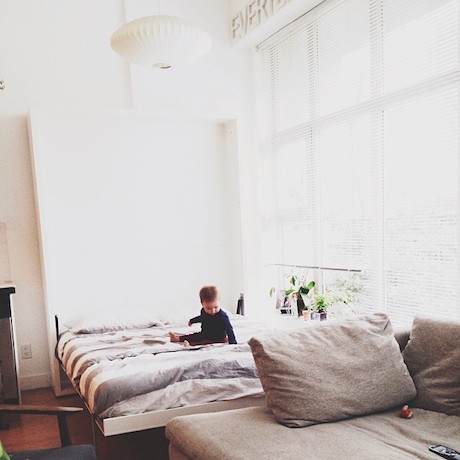
600sqftandababy-living

The space itself is a high-ceilinged one bedroom/one bath condo. The bedroom has been given to their son, while they sleep in what’s effectively the dining room on a Ulysse wall bed by Resource Furniture. 

Asked if they’ll stay in their small space, Alison wasn’t sure. “Right now we are living in the moment, if there is anything I have learned from being a new mom, it is to live in the moment more…We hope to have another kid in the next couple of years. So far we have no plans to leave our little apartment, and we couldn’t be happier with our decision to stay here.” She says her husband dreams of adding the Resource Furniture bunk murphy beds when they have a second kid. Either way, she reports that they are committed to “living thoughtfully with less stuff.”

When asked if she had any suggestions, Alison said that people should know that they can live in a small space with children if they want to. “It just takes a little time to think about what is most important to you and what you could live without. The best part is when you give up a few things that don’t really matter like an extra closet, stationary bed or 15th pair of shoes you will be surprised what you gain.”

Head on over to 600SQFTANDABABY to see and read more. 

2 Bedrooms, 4 Kids, 1 Mom, Lots of Ideas

People frequently ask us for more stories about families–particularly how does one fit big families into small homes? The home of Kip Longinotti-Buitoni is a great example of such a beast. Following a divorce in 2005, she and her four children moved from their suburban home to a two bedroom Manhattan apartment. At 1400 sq ft, the space was large by New York standards, but its configuration was really only suitable in traditional terms for a couple with a young child, according to architect Tim Nanni of Construct Architecture, who was in charge of making the apartment look and work great for the Longinotti-Buitoni brood.

At the time of moving in, Longinotti-Buitoni’s children ranged in age from 10 to 17. The three oldest were girls and the youngest a boy. All of this necessitated flexibility for when the older kids left home as well as the boy’s eventual need for privacy.

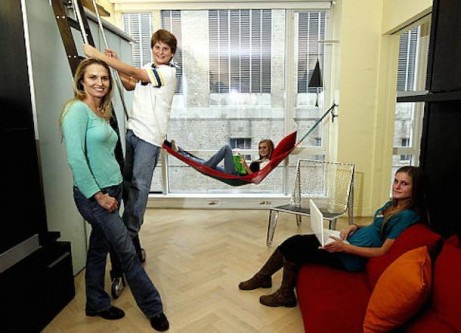
Nanni said he was was tasked with providing “each family member with a satisfactory sleeping/bathing/working solution…[as well as a] big cooking/dining/gathering/entertainment space.” He leaned heavily on Resource Furniture and their line of Clei transforming beds and builtin storage to make this all possible. In terms of layout, Kip took the master bedroom while the children took the second. The children’s beds did double duty as desks during the day, and everyone found their own corner of the apartment. In addition to housing much of the kid’s stuff, the amply-sized living room featured a couple additional beds as well as a hammock, resulting in the ability to sleep nine.

Longinotti-Buitoni wrote to us in an email that the kids’ transition from their suburban home was seamless. The new layout worked great and each child “found their nooks and took to them. Marco studies out in the dining room living room area while Sybilla would study in her room, up in her bunk, which in a city apartment can feel like a separate universe completely.”

Longinotti-Buitoni wrote, that “space is a luxury and no one needs master bedrooms vast as oceans. We have plenty of room and the only thing that has mattered is the vibe in the space, which has always been great.”

Longinotti-Buitoni said that her home and its layout has inspired many moms and families in figuring out how to fit their new family members into frequently small New York apartments.

Many people, particularly families, find themselves disheartened by the enormous expense of real estate in major cities. What Longinotti-Buitoni shows is that there is more than one way to use space. “I would recommend it to anyone who wants to be in the city…[carving] out spaces within space, rooms within rooms.” Quoting her architect Nanni, Longinotti-Buitoni said, “Living in NYC is a game of inches.” Her apartment shows that when those inches are used right, a space can do far more than one ever thought possible.

Top image via Daily News

The Future of Apartment Sharing

Often the best way of downsizing is not getting your own tiny house or apartment, but sharing a larger house or apartment. But finding a nice place to share, nice people to share with and enduring the myriad issues that house-sharing brings, often drives people to pay more than they want in order to live alone. Enter Stage 3 Properties, a real estate startup that seeks to alleviate the woe that often plagues the shared-housing experience.

I spoke to Chris and Andrew Bledsoe, the brothers behind the Stage 3. They explained to me how firsthand experience–verified by focus groups, surveys and other research–showed a gulf between how people live and what the market is offering.

They found that young people, particularly young professionals, are living very differently than they did 20 or 30 years ago. In fact, the name Stage 3 is taken from the third stage of life, which they define as “emerging adulthood”–the period right after college and before adulthood/parenthood. These third stagers are choosing to stay single longer. They are more mobile. They are choosing live experiences and cities over stuff and the burbs.

But these same people are facing new challenges like a stagnant economy and a severe shortage of attractive, affordable housing options in most major metropolises.

Even finding clean, basic housing–which is what many of them are looking for–can be out of reach. Christopher Bledsoe said, “Most landlords require an annual income of forty times monthly rent. Since the average rent for a studio is around $2500 in many parts of Manhattan, that works out to be $100K just to get your foot in the door.” This is a big number even for the relatively well-heeled first year analyst at Goldman Sachs, he says.

Faced with this situation, most turn to what he calls the “underground housing” market. Stage 3 did a deep analysis of Craigslist rental listings in thirty of the top US metropolitan areas and they found a significant percentage of listings were for people posting in the “rooms/shared” category–i.e. people looking to rent out a room in their apartment or even sometimes share a room.

worst-room

But Bledsoe believes that most of these situations are far from ideal. He points to the Tumblr blog “The Worst Room,” which showcases the dregs of Craigslist rental listings, as an example of what awaits many people looking for an apartment share (something I, a longtime New Yorker, can say is not so far off the mark). 

Then there are other inherent problems with roommate situations: Many apartments are not designed with the 20-something shared renter in mind, often resulting dining rooms and living rooms that double as makeshift bedrooms. Meanwhile, finding roommates you like is a crapshoot at best; you are often financially tethered to virtual strangers through a lease; most people have different ideas about what constitutes “clean”; and so forth.

Stage 3 has created a branded solution they call “Ollie” (a phonetic play on “all-inclusive”). Ollie is a system that addresses many of the problems facing people who are looking for a nice place to live in a good neighborhood, and might not be able to afford a studio (or qualify for one), and who want to avoid terrible roommate situations and ill-suited tenement style accommodations. Here’s what Ollie will offer:

  • Purpose-built micro-suites, designed specifically for sharing, with large bedrooms and smaller common spaces (sample two-bedroom floorplan below).
  • Furnished rooms that include space efficient furniture. They are planning on using beds from Resource Furniture.
  • An online roommate matchmaking service, akin to an internet dating site.
  • Lease insurance, which protects you should one of your roommates bail from his/her lease.
  • Full-amenities like house cleaning and laundry will be included in rent.
  • Some of their buildings will feature hotel-style pools and gyms.
  • And, Bledsoe’s personal favorite, social programming designed to foster networking opportunities and a sense of community among neighbors. Think weekend white water rafting trips upstate during the summer months and ski trips in the winter months.

Bledsoe says Ollie will cost 30% less than renting a studio in the same neighborhood. In other words, if a studio were to cost $2500 in a newly renovated, full-service building, then Ollie would target per-tenant rents of about $1700, inclusive of furniture, housekeeping and other amenities. This might strike some (non-New Yorkers) as a large number, but Bledsoe points out that this is not too different than the price of renting a spare bedroom on Craigslist within a shared apartment, possibly even within a walk-up building without any of the added accoutrements that Ollie promises to deliver. Moreover, he believes the social component of living in an Ollie apartment will prove to be among its biggest selling points, providing benefits that cannot be obtained by living alone in a studio.

Screen Shot 2015-07-14 at 2.33.42 PM

Stage 3 does not want to limit Ollie to the most exclusive neighborhoods in Manhattan. Through a partnership with New York-based Simon Baron Development Group, they are aiming to offer 10K units in the next few years throughout New York as well as other east coast cities like Boston, Philly, Washington DC and Miami. They have three projects in the New York area in the works that will roll out in the next couple years, with the first units leasing in 2015.

As we noted the yesterday, many individuated micro-apartment developments are stalling because of regulations. Moreover, even when studio-style micro-apartments do hit the market, their rents will still be out of reach for many, leaving a huge need for clean, basic housing. The Bledsoes have received pre-consideration approvals from New York City’s Department of Buildings, which they say validates that Ollie is a solution that will work without any housing reform, improves upon the common practice of apartment sharing, and stands to represent a significant addition of clean, practical housing in today’s cities.

Big Personality, Small Apartment

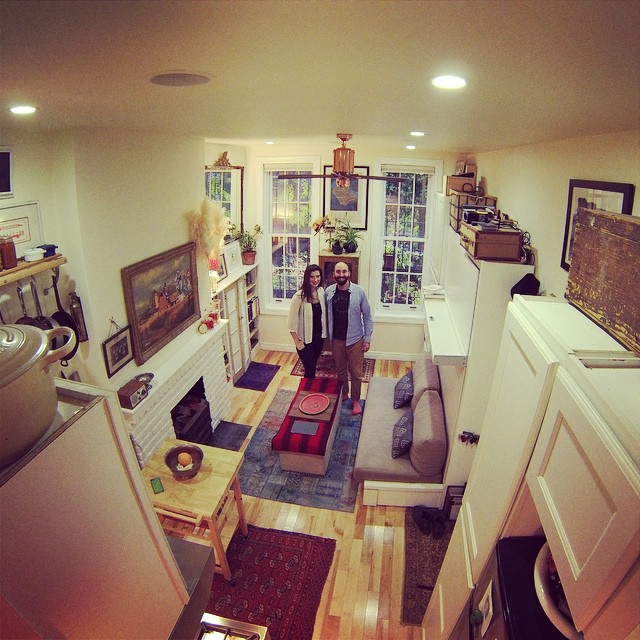
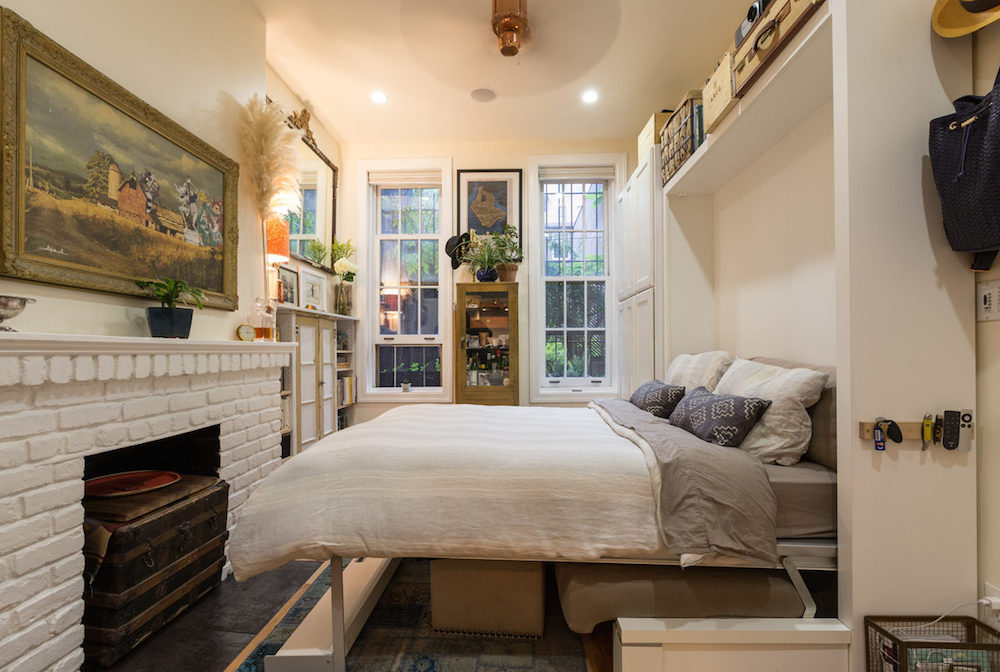
We have a tendency of showcasing sleek, somewhat futuristic small apartments on this site, and while we are quite unapologetic about this, it is by no means the only aesthetic available to small space dwellers. In fact, many of our readers appreciate a more lived-in vibe to their small interiors, and we thought this 242 sq ft apartment in Manhattan’s West Village a nice example of what that can look like.

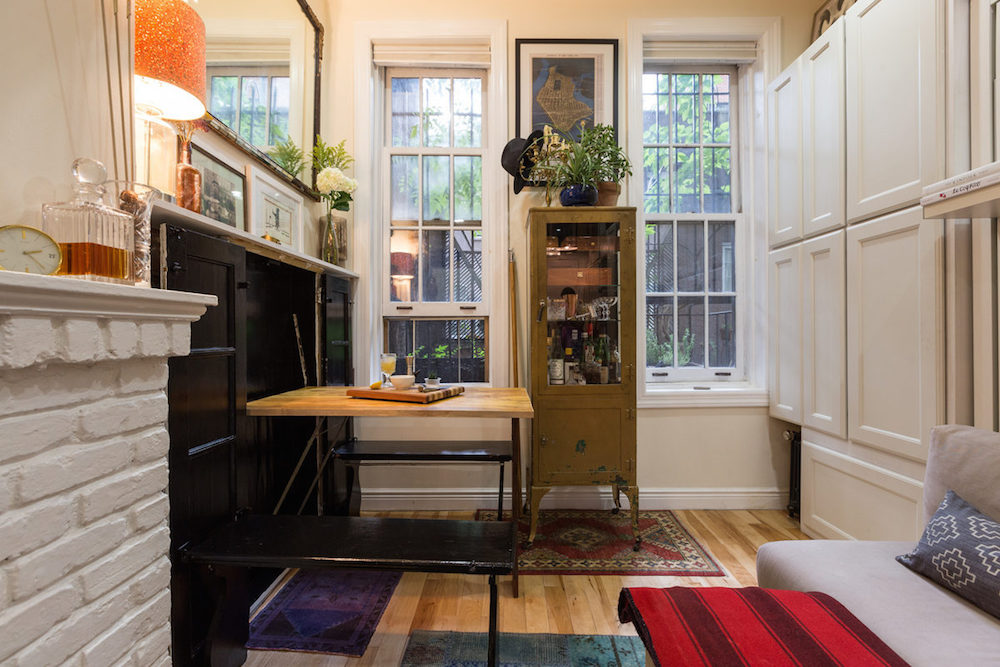
The apartment is shared by couple Jourdan Lawlor and Tobin Ludwig. The former bought the tiny place a few weeks before meeting the latter, and when things got serious, they decided to throw money into the apartment rather than moving to a larger space. They replaced the kitchen, added cabinetry and bought the Nuovoliola wall bed/sofa from Resource Furniture, which turns the main room–i.e. the only room–into the bedroom. There is also a pocket dining table and bench that pull out of a cabinet.

jourdan-lawlor-garden

The apartment benefits greatly by its access to a communal garden, which the apartment faces out into. Another perk is its location in the heart of the West Village, a neighborhood that enjoys the split personality of being lively and tranquil (with some block-by-block variation).

Unlike many apartments we feature here, the little space is brimming with art, books, rugs and other stuff people collect over the years. That said, the couple did have to get rid of a lot of stuff to fit into the space together. Ludwig spoke positively of the experience, telling Curbed, “We both culled things we accumulated that we had been hauling from place to place because we could. I don’t feel like I lost anything, but I gained a lot.”

Via Curbed

Furniture System is the Center of Entertainment

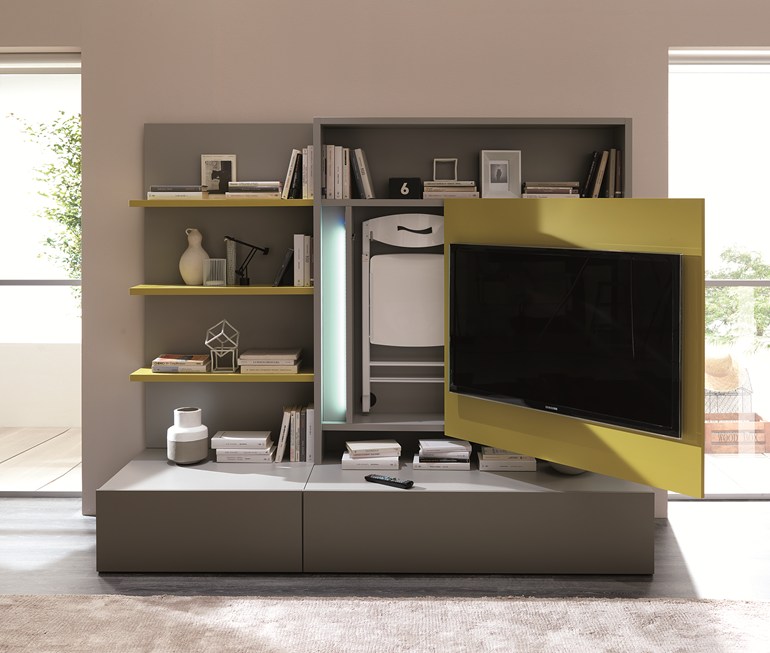
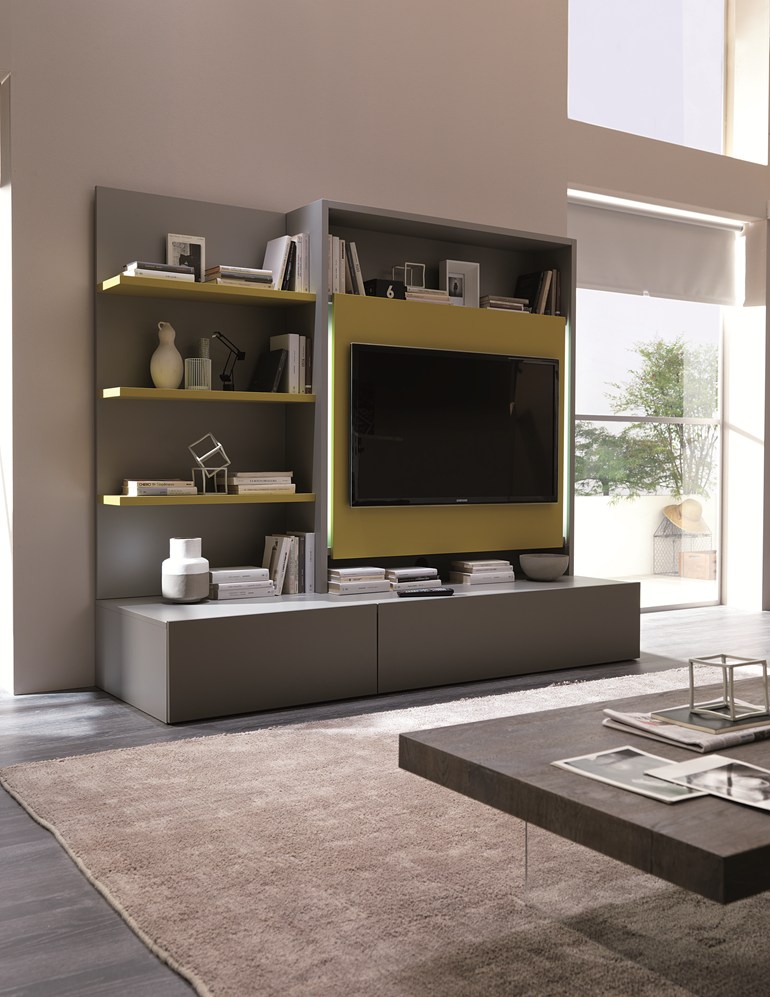
For better of worse, dining has gotten pretty casual in our modern times, with many people taking their meals on a couch, at a small kitchen table or, if we have one, counter. Paying for and maintaining a dedicated dining room whose main function is to be on standby for the occasional dinner party doesn’t make much financial sense. But having the capacity to properly entertain is pretty sweet, which is why the Smart Living TV wall system by Ozzio Design is pretty sweet. Concealed inside the entertainment center are chambers that hold a collapsing dining table and six folding chairs.

The front panel holds a large TV, which swings out of the way to access the chairs. This makes the system ideal for folks for whom the TV is a room’s centerpiece (not a judgment statement, just a fact).

The system is available in the US through Resource Furniture. The TV rack/storage element can be ordered without the side shelving for $5,300 in a lacquer finish. The “Mini Long” table starts at $2,040, and a set of 6 Nobys chairs starts at $960. Grand total: $10,950.

We know some our readers are going to get in a tizzy about the cost. That’s fine. But hear us out post-tizzy. A dedicated dining room is easily 100 sq ft. In cities like San Francisco and New York, price per square foot for an apartment purchase regularly exceeds $1000–i.e. $100K. But let’s say you live in a city like Washington DC, where one and two bedrooms only cost around $500 per square foot. That’s still $50K. Not to mention, any reasonably high quality entertainment center, dining table and chairs is going to run you at least a couple grand. Depending on your priorities and means, this math is way easier to justify than paying for a room that’s used a couple times a month.

4 Pieces of Furniture that Mix Business with Leisure

For today’s work-at-home professional there’s often a fuzzy division between home and work life. Particularly in small spaces without dedicated offices, there’s an imperative to create some division lest we sleep through our workday or work through our sleep day. Multifunctional furniture can do this, creating distinct functions for different duties. Here are a few pieces that shift a room’s focus from work to leisure or vice versa.

BLESS

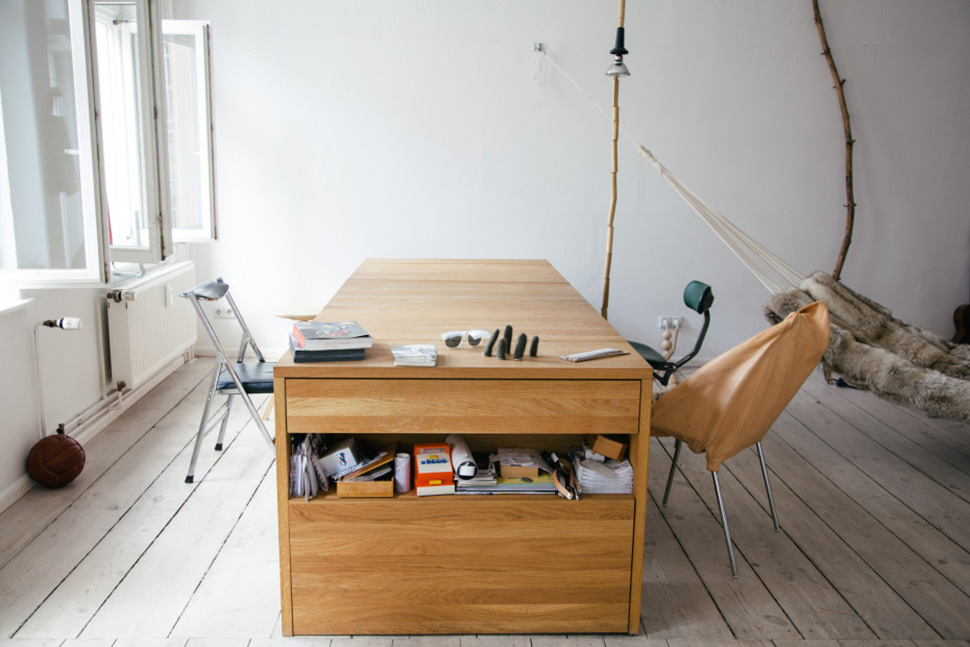
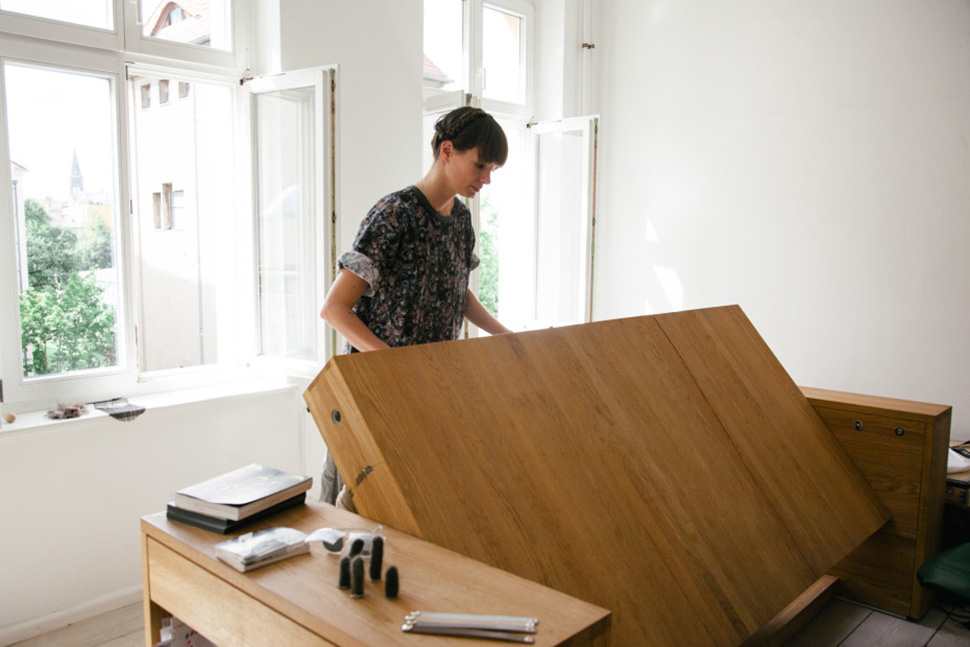
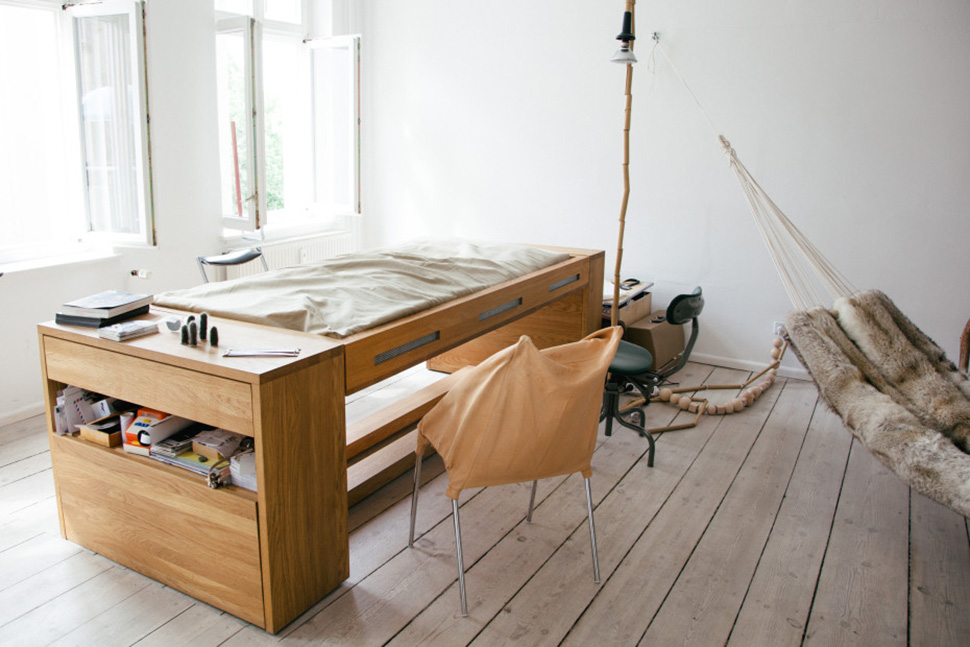
Berlin-based BLESS design studio made this table whose top flips over to convert into a single bed. The table/bed, which features a bunch of storage, would be great for artists who need large work surfaces or for people who have teams. It would also make a good dining table. (It might not be good for people with partners). Gizmodo reports that the unit is available through BLESS’s seldom-updated, confounding website. We’ll take their word for it.

Vitra

vitra

Venerated Swiss furniture maker Vitra will be showing off this cool cubicle concept at this week’s Orgatec tradeshow in Cologne, Germany. Inside the cube is a surface that can raised and lowered to be used as sofa, conventional desk or standing desk. While the piece does have a somewhat office-y vibe, we could imagine having one of these in the house as a dedicated office space. We could also see lengthening it to make a bed.

Resource Furniture Ulisse

Resource furniture makes a number of wall-bed/desk or tables. It houses a queen size bed and has a desk on the front. Prices start at $4,150.

Studio NL

studio-nl-desk-bed-4 studio-nl-desk-bed

The George Constanza, ahem, 1,6 S.M. of Life line by Studio NL features a single bed underneath a desk top. They’ve included a place for a computer monitor/tv and the head of the desk/bed opens to provide ventilation or something. This design seems best suited for the office worker with a horrible home life.

We Talk to Ron Barth of Resource Furniture

We throw the name Resource Furniture around this site with a high degree of frequency. The New York City-based retailer–who also has seven other outlets around the world–has one of, if not the largest collection of transforming furniture on the planet. More than purveyors of Murphy beds, RF has found its niche selling high end, quality transforming furniture, worthy of keeping for many years.

We took a moment to speak with RF’s president and co-founder, Ron Barth about how they came to be, what they do and why they do it.

David Friedlander: Tell us about how Resource Furniture came to be?

Ron Barth: Steve [Spett, co-founder] and I used to work at the Pace Collection on New York’s Upper East Side. We both left at the same time in 2000 and decided to start our own furniture company. Rather than having a physical collection, we wanted to start a catalog showroom. Our experience at Pace showed that people were often willing to buy furniture based on pictures. We wanted to offer European furniture with great quality, design and value. We scoured Europe, going to shops, testing furniture, turning cabinets upside down–making sure we were dealing with great manufacturers. After several trips over a yearlong period, we accumulated 460 catalogs, 98% of which were from Italy. We rented an office space with an 11’x16’ conference room where people could go through the catalogs and pick the furniture they wanted. In 2003, we got a showroom at our current location [969 3rd Ave] so we could have some floor samples.

[divider]

In a bigger space, there’s no imperative to edit your life. I recently went through some stuff in my home…There were beanie babies. What was I holding onto them for? Investment purposes? 

[divider]

We really found our niche in transforming design in 2007. Timothy Nanni of Construct Architecture Studio commissioned us to make a two bedroom apartment in New York work for a single mother and her four children [pictured below]. We furnished the entire apartment with Clei furniture [the manufacturer of many RF’s furniture]. The project went off without a hitch. Steve and I realized we had a real business here. We ordered floor samples and installed them; bought some ad space in the NY Times and the rest is history.

Most high end furniture doesn’t take space efficiency into account because the people who can afford it usually have huge homes. We’ve been successful because we offer something unique: quality furniture with high design that optimizes any space it’s put in.

DF: Who buys your furniture?

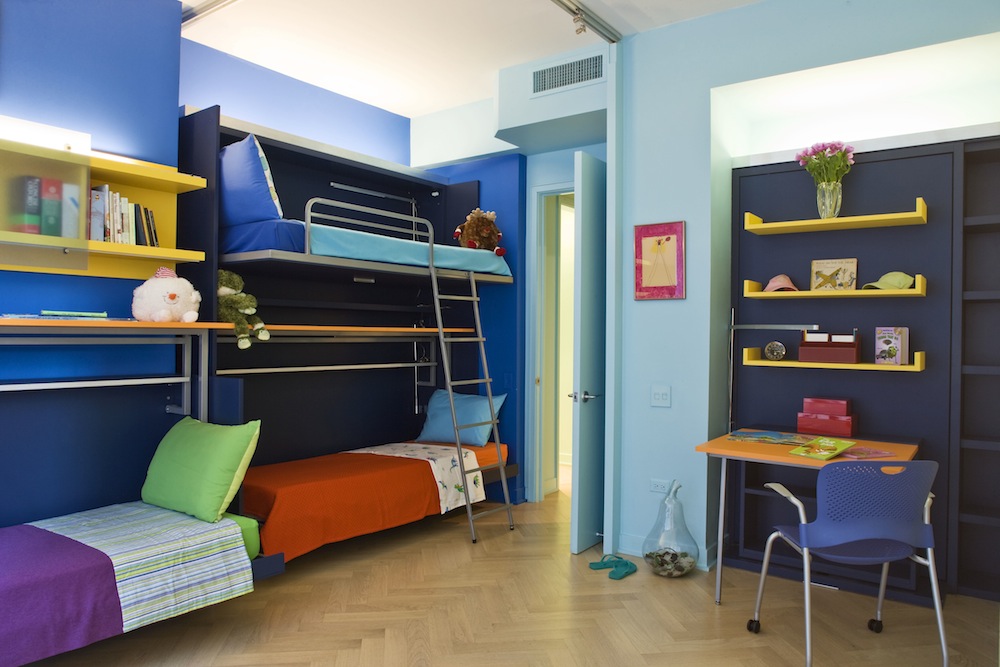
RB: We have all types of clients. We do a lot of kids rooms. Many people, especially in New York City, don’t want to or can’t afford to move from their one or two bedroom apartments when they have a kid or two. Our furniture makes it possible for a smaller space to function like a larger one. For example, we can fit a bunk-bed, desk and sofa into a 10’ x 12’ room. There are people looking for second bedrooms that can be used as something else like an office. We get people looking to make their studio apartments into functional living spaces–not just big bedrooms. We get a lot of renters. Conservatively speaking, you can save $500/month by renting a studio versus a one bedroom. That’s $12K over two years and you have furniture that can come with you to your next place. We also get people decking out vacation homes. We have fit sleeping for eight in a 300 sq ft room. All types.

DF: What do you think are the most important aspects of designing a small space?

RB: The first thing I’d say is the smaller the space, the better the quality has to be. A small space really accentuates imperfections, so I think it’s important that tolerances and precision of craftsmanship be high. Our furniture is simple and high quality, so it doesn’t lend itself to sensory overload. When furniture is of poor quality, particularly in a small space, it’s tough to feel centered.

The next thing is to focus on the function you need the space to perform. If someone works 18 hours a day and just crashes out in their bed at night, they may just need a bed and a roof. But if you work from a one bedroom home, have a spouse and child, you’re going to need something more. We have 40 different bed products with all varieties of functionality: twin beds with desks, queen beds with sofas, full-sized beds with dining tables and so on. However you need your home to function, we can help achieve that in less space than most conventional furniture would permit.
DF: What do you see as the biggest advantages to living in small spaces?

RB: There are a number of advantages. In a bigger space, there’s no imperative to edit your life. I recently went through some stuff in my home and because we have a little extra space were holding on to things that we just don’t use. There were beanie babies. What was I holding onto them for? Investment purposes? Many people re-sign leases and stay at homes larger than they need in order to avoid confrontation with their stuff. All this stuff begins to own you, rather than you owning the stuff.

When you live in a small space you don’t accumate this kind of junk. You’re careful about what you buy, you get rid of stuff you don’t need, you don’t have that pair of shoes you don’t use.

The other thing is many people who live in small spaces often have more interesting lives. When you live in a small space with less stuff, your life becomes more about what you’re interested in rather than what you own. What are you working on, studying, who do you socialize with–these become the focal points of your life, not the things you collect or the size of your TV.

I also think it’s easier to feel centered in a smaller space. We all know what it’s like to find that perfect corner where we cozy up with a great book. Can you do that on a bench in a three story foyer of your McMansion? Of course not. There’s no center in a space like that.

Of course there’s the practical stuff: less stuff, cleaning, cheaper to rent, buy, heat, cool, pay taxes on, etc.

DF: What are the biggest disadvantages?

RB: Sometimes, people just run out of space and don’t know how to fit their lives into their existing spaces. Sometimes this is a legitimate thing. But I’ll say that people “outgrow” their spaces as the result of not having the furniture they need. If they really tried to make their spaces work efficiently, working with the kind of furniture Resource Furniture sells, more people would find their current spaces are more than sufficient–in fact, they might be downsizing more.

DF: Tell us about one of your favorite projects?

RB: A man from Kooskia ID [middle of nowhere] calls me up and says he needs to buy furniture for his house. He says he has five children and they’re running out of room in their four bedroom house. I tell him that furnishing an entire house will cost a lot of money. He said he figured it was–it was made in Italy and there are no prices on the website. These were not the hallmarks of discount furniture stores. I suggested he might be better off moving to a larger home. How much could a five bedroom house cost Kooskia, ID?

He replied that a five bedroom house would cost about $100K more. But that was the least of it. One of his children had a disability, so moving would likely mean that he’d have to change schools or increase the commute to his school. In fact, the entire family’s routine, which worked quite well, would be disrupted if they moved. Then there’s finding this new home. He and his wife worked. They’re “free time” was spent making sure the kids were fed and their homework was done. When were they going to look for a house? Two of his kids were 15 and 16. They’d no longer need the extra bedrooms in a few years. Moreover, a bigger house would have higher taxes, greater utilities costs and require more maintenance. I got the picture.

He bought an entire house’s worth of furniture–$44K total plus another $7K to ship to Kooskia. He said that was cheaper than real estate commissions, closing costs and moving would have been for buying a new house and selling his old house. He put all of the furniture in the garage and did a room a weekend. We never met in person and that was the last I heard of him.

I’m actually not a fan of pigeon-holing the idea of “small space design.” I think it’s about finding a space that’s appropriate for you, your budget and needs. For this guy, that was a four bedroom house. When you find that space, through smart design and use of furniture, make it work as efficiently as it can. That’s the business Resource Furniture is in.