Fashion Week, Edited

If you live in New York City or are interested in fashion, you might be aware that this week is New York Fashion Week (NYFW for the cognoscenti). It’s a weeklong celebration of the fashion trends that will make your current clothes look inexplicably outdated in the not so distant future. The practice of continually refreshing and overhauling one’s fashion is, for many, one of the leading causes of accumulating way too much stuff. As I oft-quote, one expert estimates that only 20% of most wardrobes are actively worn. The rest is just filler–likely casualties of changing fashion.

Let me hazard to say that I am not a fashion basher. As much as I continually extol the virtues of having a few well-selected garments, I am pretty fussy about what those garments looks like. I am particular about the color, fit and function of my clothes. I believe fashion is one of the most practical mediums in which one can express him or herself.

But let’s face it, fashion has a super dark side. As mentioned, many people find themselves with way too many clothes, leading to stuffed closets and emptied bank accounts–all done in the name of staying au courant. And then there are the considerable environmental and human right tolls paid in order to keep our clothes cheap and plentiful (follow this innocent looking link if you are interested in knowing more about what I’m alluding to).

As with everything, less, but better wins the day. Those of us living above or below the tropics can’t very well live without clothes, but we can create wardrobes filled with necessary clothes that are worn and cherished. In honor of NYFW and looking spiffy all year long, here are a few posts from the past fashions that will help you create your edited wardrobe.

  • Project 333. Courtney Carver is like the minimalist Anna Wintour. But instead of yay or naying particular fashions, she challenges people–women and men–to put more thought into their wardrobes by selecting 33 items to wear for three months. What’s great about her approach is that it’s pared down, but no so much that you can’t achieve variety.
  • Outlier Tailored Performance. I know, I’m a bit of a fanboy, but this company is a great example of how you can sell folks (ok, mostly men) great-looking, responsibly manufactured and sourced clothes that allow you to do more with less.
  • Shapeshifting fashion. For those who might want to spice up their minimalist wardrobes, companies like MORF create clothing that allows several looks with the one garment.
  • Rent and shared clothing. If you are simply not someone who can wear the same thing too long, consider renting or swapping your clothes. It’s way friendlier to your pocketbook, the planet and will give your closets some breathing room.
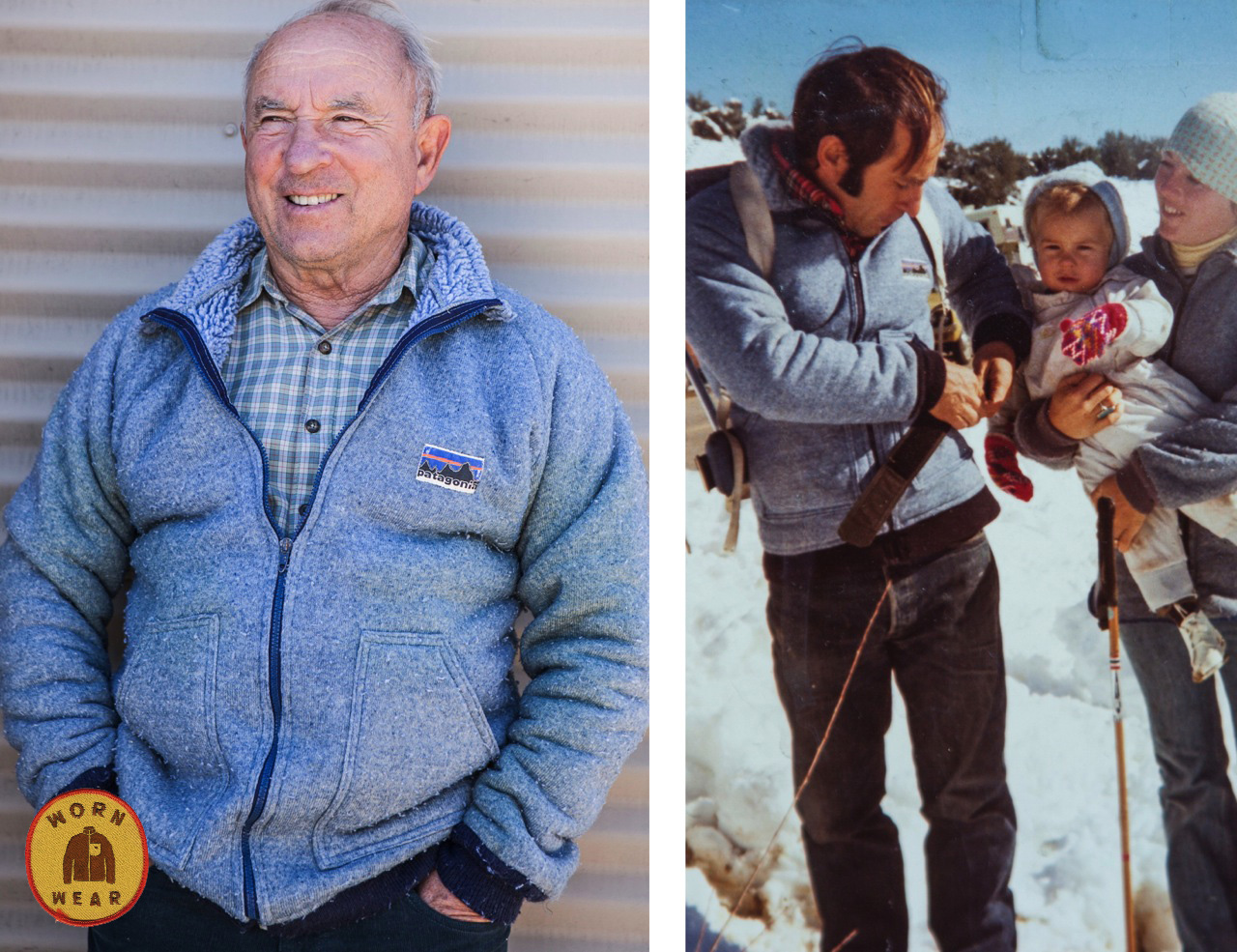
  • Fall deeper in love with your existing clothes. Just like friends and family, sometimes we take great, but familiar things for granted. Patagonia’s Well Worn campaign urges us to fall back in love with the things we have. Love them, wear them, fix them if needed. Sometimes the fashion we seek is the fashion we already have.
  • Wear a uniform. Yep, I’m a broken record, because uniforms are so awesome! They’re the autopay system of fashion–select one and forget about it. There’s something so liberating about not thinking about what you have to wear on any given day.

Sam Aronov / Shutterstock.com

This Truck Is Cruising the Country Honoring the Stuff We Got

There was a time in the not so distant past when people held on to and cared for their stuff. They fixed toasters, darned socks, patched holes and did a variety of things that didn’t involve one-click-shopping for replacements. While those times seem to be a distant memory, Patagonia is trying to bring them back one garment at a time. As part of their Well Worn program, the company is sending out the Worn Wagon, a vehicle whose mission is to spread love to our slightly tattered, but totally useable garments.

The Worn Wagon departed this month from Ventura, CA. The wagon itself, an old Dodge truck that runs on biodiesel is the handiwork of surfer and artist Jay Nelson. The truck’s trailer is made of salvaged wood from wine barrels; solar panels power an industrial sewing machine housed inside. The wagon will be cruising the country looking for garments in need of repair. A repair person manning the wagon will sew your hole or replace your zipper or do whatever needs to be done to your old garment for free–whether it’s Patagonia or not. The wagon will be stopping in stores, trailheads, coffee shops and more (see tour stops here).

worn-wagon-interiorFor someone who is frequently dubious of corporate claims about commitments to consuming less and giving a poop about the environment, I am consistently impressed by Patagonia. They really seem to get it. The realize the way to live with less is buy great stuff from the outset and make it last as long as possible.

Honor Your Holey Relics

If most of us are ashamed of shabby clothes and shoddy furniture let us be more ashamed of shabby ideas and shoddy philosophies….It would be a sad situation if the wrapper were better than the meat wrapped inside it.” ― Albert Einstein

If we were to think the world dressed like TV characters, we might think everyone wears freshly-pressed, perpetually clean clothes. But TV-reality and real-reality seldom intersect. Real-reality is fraught with stains, scuffs, holes, worn-out soles and all varieties of wear. Patagonia, the folks who brought us Common Threads, not only recognizes the reality of wear, they celebrate it. They have produced a movie (below) and launched a website called Worn Wear. Here’s how they describe it:

Worn Wear is an exploration of quality – in the things we own and the lives we live. This short film takes you to an off-the-grid surf camp in Baja, Mexico; a family’s maple syrup harvest in Contoocook, New Hampshire; an organic farm in Ojai, California; and into the lives of a champion skier, a National Geographic photographer, and a legendary alpinist. It also features exclusive interviews with Patagonia founder Yvon Chouinard.

Released as an antidote to the Black Friday and Cyber Monday shopping frenzy, Worn Wear is an invitation to celebrate the stuff you already own.

Their website features a dozen or so folks sporting Patagonia clothes, along with short stories about how the clothes were worn over the course of their lifetimes. The pictures are not of the latest Patagonia clothes, but old, torn and tattered ones. One picture of Patagonia founder Yvon Chouinard has him rocking a vintage, pilled-up fleece in the present day–couple with him wearing the same jacket 30 or so years earlier.

While you’re out not shopping this Friday, November 29th, Patagonia stores across the US will be celebrating Worn Wear (day?), with movie screenings, repair clinics, food and beer. See list of event locations here.

To the cynical eye, Worn Wear might seem like a clever way to lure people into a Patagonia store. This may be true to a small extent, but Patagonia really does seem to be earnest about creating a new breed of capitalism. With numerous programs like Common Threads, Worn Wear, and Footprint Chronicles (a site that allows people to follow the lifecycle of Patagonia garments) as well as a policy of donating 1% of all sales and 10% of all profits to environmental causes–the company seems serious about only selling the good stuff you need, and making that stuff last as long as possible.

Patagonia to Shoppers: Don’t Shop if You Don’t Need To

While most companies are dangling the carrot of ludicrous deals this week–one of, if not the, busiest shopping week of the year–outdoor clothing company Patagonia has another message: Don’t shop if you don’t need to. The company’s two year old “Common Threads Initiative” is trying to get people to think differently about when, how and why they buy.

The initiative has a sequence of suggestions and questions the potential shopper can run through:

  1. Reduce. Do I need this?
  2. Repair. Can I fix what I already have?
  3. Reuse. If I can’t repair the thing I want to replace, can it be sold to someone who wants it or used somewhere else like a charity?
  4. Recycle. Can the materials of my old thing be remade into something else?
  5. Reimagine. Can we change global consumer habits to create a sustainable planet?

Patagonia doesn’t just give good advice; they provide resources for how to carry out their plan. For “repair” there is an in-house repair service where you can send your torn clothes to, for “reuse” there is a link to the Patagonia eBay store and for “recycle” they provide an address to send your old Patagonia clothes so the materials can be used for new garments.

You can even take their pledge. The company pledges to “build useful things that last, to repair what breaks and recycle what comes to the end of its useful life” and you pledge to “buy only what I need (and will last), repair what breaks, reuse (share) what I no longer need and recycle everything else.”

We applaud this initiative. It’s very much in keeping with the LifeEdited ethos of “less but better.” And from what we know of Patagonia as a company, the initiative is more than just marketing jargon. It’s their way of conducting–and transforming–business.

What do you think? Is this an earnest effort to transform consumer habits or fancy marketing? This author, for one, feels much more inclined to buy Patagonia products…is that a bad thing? People do need stuff…why not make it the good stuff from people who care?

via Treehugger