Introducing LifeEdited: Maui

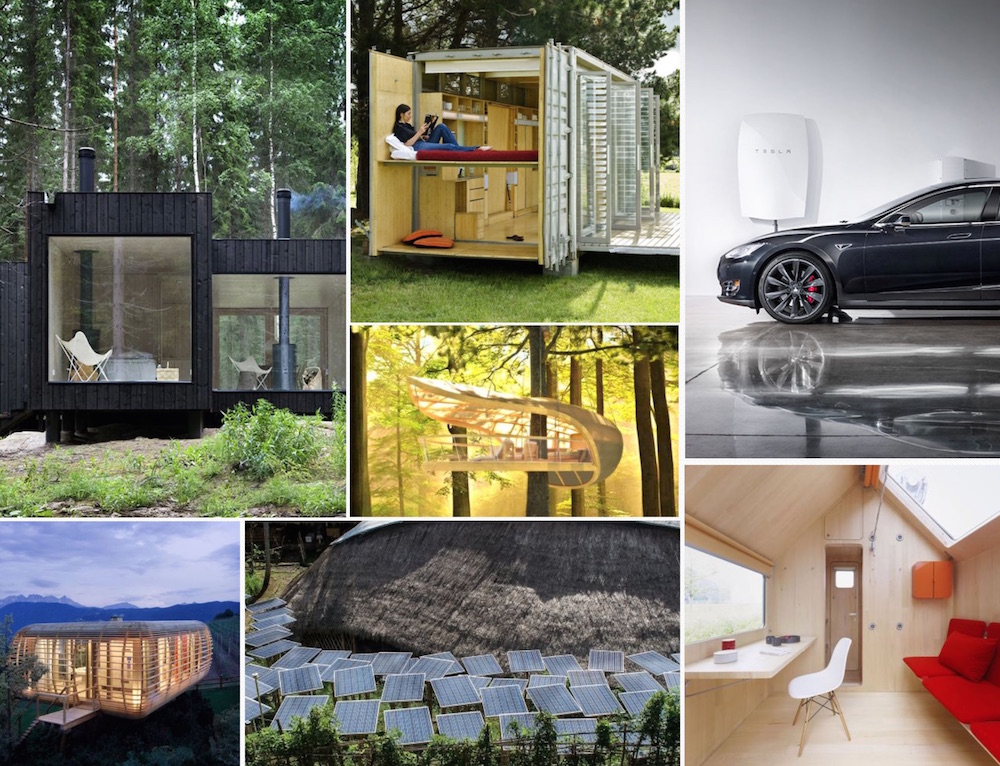
It’s been years since we revealed the first LifeEdited Apartment (LE1) in New York City. It was both design laboratory and CEO Graham Hill’s personal apartment. But as some might know, Graham splits his year between NYC and Maui, initially due to a kite surf addiction. A few years ago he bought a 2.2 acre piece of land in Maui with the intention of one day designing and building a home that incorporated many of the same ideas that informed LE1. That one day is today. LifeEdited is building a mini compound, calling it, appropriately enough, LifeEdited: Maui (LEM). The home will showcase the best design and technological ideas for high quality, low impact living. 

Thus far, LifeEdited has mostly been an urban tale. Doing more with less is a necessity in the city. In Maui, we have a 1000 square foot max of what we are allowed to build…so the beauty is that we are making a four bedroom, 2.5 bath with that space where all the bedrooms transform to other uses during the day. We created a program (subject to some change) that reflects how the project can achieve this aim. We want to maximize use and experience while minimizing impact. Here’s what we came up with:   

  • Making the main house under 1000 square feet. We don’t want to encroach on the land any more than we have to.
  • Employ transforming design and exploit outdoor space as much as possible. We want to make the space we have do as much as possible.
  • Make it off-grid and net zero or even net positive. We will use solar power, water catchment systems, composting toilets, etc.
  • Employ smart home tech to improve user experience and reduce energy consumption.
  • Employ electric vehicles such as bikes, trikes, cars that will be charged with power generated by on site solar.
  • Employ agriscaping, taking advantage of the fertile soil to grow food on the property.
  • A water catchment reservoir.
  • Use carbon offsets to mitigate one of the project’s biggest energy sinks: airline travel.

An hour long TV show about the project will air on the DIY Network later this year (and likely on HGTV). And we will be giving regular updates on this site and social media. We will be reaching out to press and various influencers on our mission to spread the less is more gospel!

Are We Using Less Stuff or Making More Stuff More Efficiently?

We recently reported on the remarks of IKEA’s Chief Sustainability Officer Steve Howard, who believes we may have reached “peak stuff”–that humans, for the most part, are on a downward trajectory in terms of the amount of stuff they consume. While a number of readers expressed doubt about this, a recently released study by the UK’s Office for National Statistics bolster the theory. What they found was that in 2001 the average UK citizen consumed 15 tons of material goods; this figure, according to The Guardian, included “the total amount of biomass (crops and livestock fodder, wood and fish), coal, oil and gas, metal and non-metallic minerals such as construction materials used in the UK every year.” In 2013, that number dropped to 10 tons.

The reasons for this reduction are numerous. There was a big drop in metal ore consumption as the amount of metal required to manufacture domestically-produced goods such as fridges and washing machines is far lower than in the past. The sales of things like CDs and DVDs and the equipment needed to play them has all but evaporated. Digitization of once-physical media has reduced paper and cardboard consumption as well. And overall, there’s a trend toward services (think Netflix) over durable goods (think Blockbuster, who shuttered in the UK in 2013).

The study is not without noise. Brits have been binging on cars and fashion lately. And some say that the reduction in the overall mass reduction was skewed by a reduction in heavy items like gypsum and sand, whose reduction is attributable to the UK’s failure to create sufficient housing for their population. 

Dependence on foreign goods is another tricky factor. The weight of imported goods has increased from 2001 to 2013, though the study tried to factor in imported goods in their study.

[divider]

33 years ago, a first generation Honda CRX got 52 MPG. Engines have become far more efficient in that time, but you wouldn’t know it. The average gas mileage for cars and light trucks is 23 MPG (a record high, but far from the CRX’s figure). The problem is that we’ve used increased efficiency to make SUVs and other large cars more efficient–rather than making compact cars more efficient.

The same thing is true of housing. Our homes have become much more efficient in the last several decades, but all that efficiency is negated because the size of the homes has ballooned.

So we are getting more efficient at making stuff, but the big question is whether we’re ever going to use that efficiency to produce less stuff better?

sarawuth wannasathit / Shutterstock.com

Thoreau’s Walden, Made Readable

One of the–if not the–seminal texts of simple living is Henry David Thoreau’s Walden. It’s the tale of a man who moves alone to the woods, lives in a small cabin to find his truth. It’s also a treatise on simple living, connecting with the earth and oneself, of removing oneself from modern society’s misbegotten systems and ideals…or so we’ve heard. If you’re like us, you’re familiar with the many Thoreauvian axioms (“Most men live lives of quiet desperation [not the actual quote],” “My greatest skill in life has been to want but little” and so on), but, when pressed, must confess that you haven’t actually read the book. Take this passage from the first line of second paragraph of the book:

I should not obtrude my affairs so much on the notice of my readers if very particular inquiries had not been made by my townsmen concerning my mode of life, which some would call impertinent, though they do not appear to me at all impertinent, but, considering the circumstances, very natural and pertinent.

It goes on like this for 400 or so pages. It’s not a critique of Thoreau’s writing ability. The book was written almost 170 years ago. This was how people wrote and spoke back then. But its arcane prose–not to mention its sometimes offensive references–is damn near indecipherable to the modern reader. Good for soundbites, but not necessarily for sustained reading.

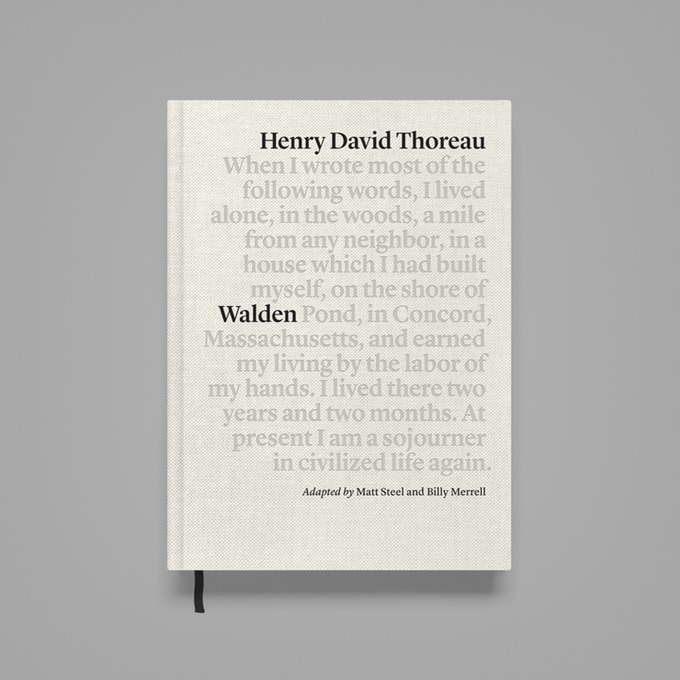
A new Kickstarter project seeks to translate Walden for the modern reader. Launched by designer Matt Steel along with writer and editor Billy Merrell and illustrator Brooks Salzwedel, The New Walden is a new take on Thoreau’s timeless wisdom.

In an essay on the site Medium, Steel explains his initial motivation:

The first time I tried to read Walden, I flunked out about halfway through the first chapter. Initially attracted by the concept of Thoreau’s experiment, I found myself quickly entangled in a dense thicket of language. I had expected to hear about the cabin he built in the first chapter; instead, I encountered an essay on economics and societal vice, with many twists and turns.

Eventually, he made it through the book and it rocked his world. He explains:

In Walden’s first chapter, Thoreau delivered the most eloquent and scathing criticism of consumerism that I’ve ever read. He saw that many of his fellow men and women were spending their best moments straining after far more than they needed; chasing after possessions and comforts that would never satisfy their deepest longings. He discovered that when we reject greed, simplify our lives, and pursue living in the present, a quiet revolution takes place inside the spirit and ripples outward into the lives of others.

The book’s impact inspired him to create a modern version, one that had updated language and was beautifully designed and illustrated.

walden-text

Steel is quick to point out that he is not changing the content of Walden, just the form. “This version will be neither abridged nor dumbed down,” he writes. “It will still read and feel like Thoreau; still set in the 1840s. I am not replacing telegraphs with emails, nor wagons with SUVs…Walden is dense, layered, and complex….So when I talk about removing literary obstacles from Walden, I’m only referring to structures, syntax, and words that have fallen out of use since 1854.”

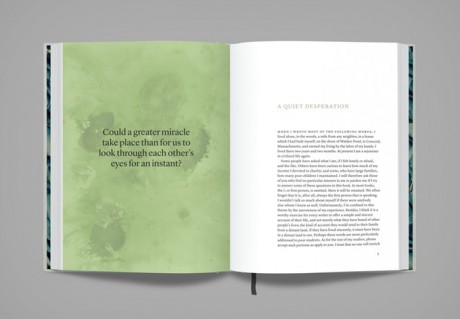
The beautiful hardbound book will not only rework the text, but will be carefully assembled, designed and illustrated, in an attempt to make it appealing to readers of today and 100 years from now. 

The campaign started today. A $15 pledge will get you a PDF version and $38 will get you a signed and numbered early bird copy. Visit the campaign page for more information. 

If You’re Going to Covet, Covet This

The term “keeping up with the Joneses” is rarely framed in a positive manner. It refers to a nasty form of one upmanship, where someone is always trying to have the bigger car, bigger house, newer clothes, etc, than someone else (i.e. the Joneses). But as we saw last year, the Australian ‘edutainment’ project “The New Joneses” flips this formula on its head. Their logic is that if you’re going to compare yourself to people, you should compare it to the right people–those who are living in forward-thinking, intelligent, responsible ways. Starting today and through the month, TNJ is doing just that with an exhibition set up in downtown Melbourne, Australia.

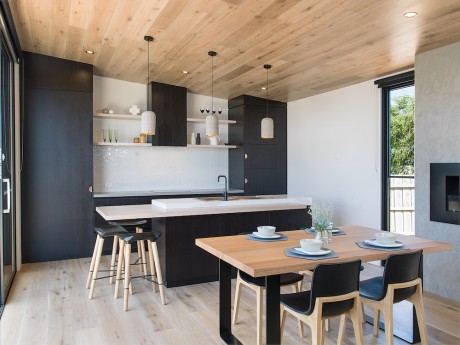
The centerpiece of TNJ exhibition is a 720 sq ft home by Ecoliv Buildings, a company that specializes in producing high efficiency, prefabricated, modular homes. The house is fully off-grid capable, with a solar array by Q Cells and solar microinverter battery storage by Enphase, providing power when the sun’s not shining. There are a host of other green features to the home inlcuding a solar hot water, rainwater tanks, LED downlights, electricity use metering, a greywater recycling system, ceiling fans, double glazed windows and low VOC materials.

ecoliovf

Since living sustainably means more than having a tricked out house, TNJ exhibition covers various aspects of daily living, both hi and low tech: from an electric BMW i3 and smart home tech to free roaming chickens and composting bins.

Throughout February, various people will be staying at the home as a proof of concept and way to spread the word. There will also be parties, movies and workshops as well (visit their website for more information).

Several years ago, Harvard released a study on obesity that was conducted on 12k people over the span of 32 years. They found that people were 57% more likely to become obese when a friend became obese. Was obesity “passed on” like a cold? Not exactly. It got passed along culturally. The study’s lead Dr. Christakis told the NY Times, how it highlights “the importance of a spreading process, a kind of social contagion, that spreads through the [social] network.” In other words, our environmental influences–the people we interact with, the messages we receive–have a huge impact on our behavior for better or worse. If our friends exercise regularly or buy a McMansion, the odds increase that we will do these things as well. TNJ seems to get this, showing that if we are to create new paradigms for living, ones that ‘live it up, with less’ as they say, we need to saturate our environment with good examples of how to do it. Check it out yourself online or if you’re in Melbourne in person

Move to Washington DC or Seattle

Living an edited life is simple in theory. Downsize your home, live with less stuff, walk and bike more, ditch or limit driving–all of this will result in lower financial overhead, allowing you to work less have more free time. It will also lower your environmental impact, allowing you to live in good conscience. But this theory is often at odds with reality. A great deal of the American housing stock is single family homes in sprawling, car-dependent suburbs, thwarting many ambitions to downsize or live a more walkable, localized existence. Then the places that have compact housing and are walkable are so god awfully expensive, that the notion of working less and having more free time can seem like a pipedream. Throw in the desires to live in an area with both a solid job market and decent public schools and you might as well be unicorn hunting. While it is rare to find areas that are affordable (i.e. wages are in line with cost of living), walkable and have solid schools, it is not impossible. A recent study by the real estate site Redfin surveyed 170 neighborhoods in the 20 cities they analyze across the United States. They found that only 24 of those neighborhoods had affordable housing, were walkable and had good schools. And as you might have deduced from the title of this post, a disproportionate number of these neighborhoods were in Washington DC or Seattle.

Redfin first looked at affordability, which they defined thusly:

A home was considered affordable if 28 percent of the local median family income could cover the monthly mortgage and principal payment, assuming the buyer put 20 percent down and took out a 30-year loan with a four percent interest rate. Homes with sale prices 20 percent above that threshold were considered expensive.

They then factored in the neighborhood’s Walkscore.com and Great Schools scores to get the full picture of a place. It was tough to hit high scores in all three categories. Some places with affordable housing had abysmal schools or are not walkable. Some places with good schools aren’t walkable. And so on. 

Redfin’s findings do have some overlap with micro-housing. Funny enough, DC and Seattle are the two US cities with the largest number of micro-apartment developments. Other cities with healthy micro-housing scenes like Austin and Chicago also faired well on the list. In fact, Redfin sees loosening real estate development restrictions as a key to making the already good neighborhoods denser and available to more people.

Redfin also gave a great maxim for deciding where to live:  

If you also want highly rated schools and a high Walk Score, look for the least-expensive home in one of the mixed-priced neighborhoods on this list. This is a lot like grandpa’s strategy to make a safe real estate investment, “buy the cheapest home on the best block.”

This statement has obvious implications for compact housing, as the cheapest home on the best block is also often the smallest.

For the full study, head over to Redfin’s site.

Georgetown and Key Bridge image via Shutterstock

4 Ways to Put Your Life on Automatic

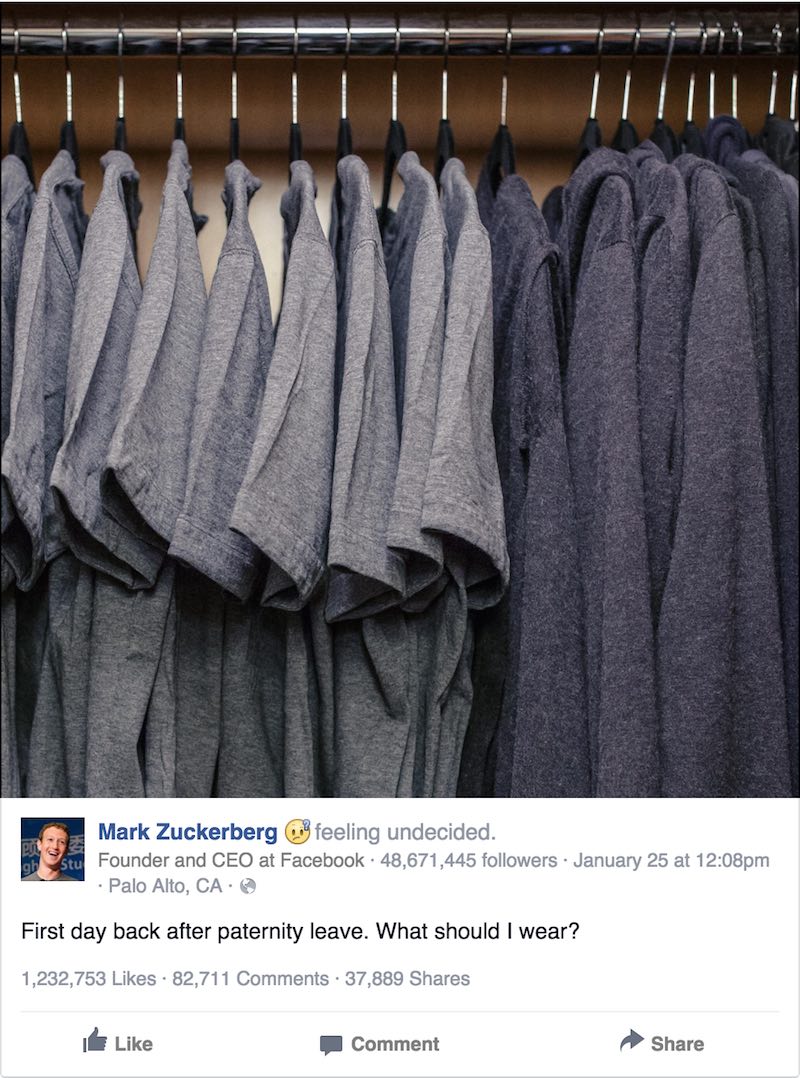
While Steve Jobs is perhaps the most famous uniform wearer of recent times, he is/was not the only tech billionaire with such a predictable wardrobe. Facebook founder and CEO Mark Zuckerberg is also fond of wearing the same thing day in, day out. In Zuck’s case, it’s a grey t-shirt and blue-grey hoodie matched to a pair of jeans. In a short talk he explains why:

I’m in this really lucky position where I get to wake up every day and help serve more than a billion people. And I feel like I’m not doing my job if I spend any of my energy on things that are silly or frivolous about my life, so that way I can dedicate all of my energy towards just building the best products and services.

Leaving aside whether you believe Zuckerberg is trying to help a billion plus people and whether you agree that the clothes we wear are “silly or frivolous,” the gist of his logic remains: we have a finite amount of time and attention for the things we find important. Any reduction in decisions surrounding unimportant things frees our time and attention for important ones. For him, the decisions he makes at work are more important than deciding what shirt to wear for the day.

While we have been known to over express our advocacy of uniforms, they are far from only way to streamline decision making. Our lives are filled with staple decisions and other attention-grabbing activities, ones that can be standardized without compromising the quality of our lives. Here are a few: 

  • Standardize food choices. Many of us eat food every day and some even eat three meals a day, which is three, sometimes agonizing, decisions. Aside from skipping meals (something this author frequently does), we can standardize our daily meal plans, either eating the same thing for several consecutive days or, if you want a bit more variety, choosing between a set amount of dishes, e.g. lunch is either pasta salad, turkey sandwich or avocado wrap. Even standardizing two of the meals (breakfast and lunch are the easy targets) helps to make our lives a lot smoother.
  • Autopay bills. Welcome to the 21st Century, a time when we no longer have to remember to pay our bills. Sure, it’s good to be aware of how much money we’re spending, but really, how often do we contest the gas or phone bill? Most bills can be both sent electronically (i.e. no snail mail) and put on autopay, automatically charging your credit card or withdrawing funds from your bank account at a set time. If it makes you feel better, glance at your account online to make sure everything is on the up and up. Imagine a world where you never have to think about overdue bills. What would that freedom permit you to do? 
  • Refine your daily routine. For better or worse, the vast majority of our days are filled with repetitive tasks: getting ready for the day, set tasks at work, cooking dinner, going to bed. Given the repetitive nature of our lives, why not get really good at our routines? Find the swiftest path to making coffee, working out, knocking out email at work, cleaning dishes at night, etc. If it can be done, it can probably be done better, faster and with less effort. 
  • Make standing appointments. Similar to the point about routine, most of our lives are filled with things we regularly want to and must do: go to the gym, go grocery shopping, do laundry, spend time with friends and family, get haircuts, etc. Rather than doing these things “when we have time”–a tack that often results in not doing the things we want to do and squeezing the things we must do in last minute–we might try scheduling our lives. What happens when we commit to doing something at a set time is we: A. stop wondering when we’ll do it, thereby freeing up mental space; and B. build our lives around the standing appointments, thereby greatly increasing the odds of not running out of time and accomplishing both our want to’s and have to’s. Ironically, having those free spaces between the fixed appointments actually allows more time for spontaneity.

What activities do you standardize or automate to make your life simpler? Let us know in our comments section.

Have We Reached ‘Peak Stuff’?

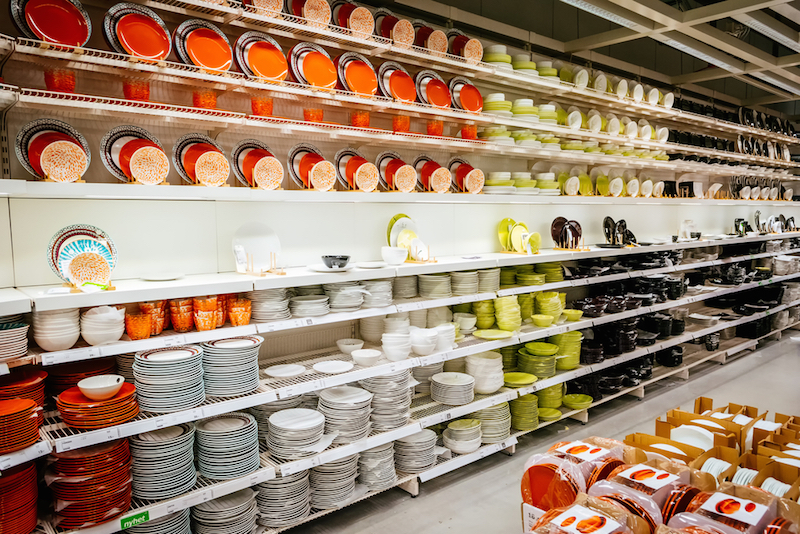
Make no mistake about it, the world still abounds with tons of stuff, but if we were to believe some, we might be approaching a state of “peak stuff”–a state where we have capped out our appetite for extraneous candle holders and handheld blenders. Ironically, one of the exponents of peak stuff is IKEA’s Chief Sustainability Officer Steve Howard, who, the other day, was on NPR talking about this theory. He thinks that the “total material impact of society in the West…[has] probably just about peaked.” He explains:

If you look at things like oil–well, actually, oil sales have peaked in the U.S. and Western Europe. Beef sales have pretty much peaked. Sugar sales have pretty much peaked. You can see trends in things like cars where young people, they’re getting their driving licenses either later or not getting them at all. This trend’s very broad across society….and we’re [IKEA] not immune from the trade. Obviously, you know, there are still people who don’t have–who have very limited means who would like significantly more stuff. But broadly, you saw a tremendous expansion in consumption and people’s livelihoods through the 20th century. And the use of stuff is plateauing out.

This is not the first time IKEA has addressed matters of reduced consumption. Their 2025 kitchen concept envisioned a future with far less food and space than the present. But the implications of peak stuff on the retail behemoth are unclear. Asked if IKEA–easily the single largest purveyor of stuff–would scale back its operations in the west and ramp them up in developing nations, Howard said, “We still want to meet more customers and to make ourselves much more accessible, so we’ll actually expand in the U.S. and still in most markets in Europe.”

His stance is that if there is going to be stuff, that that stuff be from IKEA, which has launched programs to promote reuse and responsible disposal in a number of its European outlets. He said that people want to reuse, recycle and generally make their stuff last as long as possible, but they often lack the channels to do so.  

We hope Howard’s theory is correct as the planet–and some might say the human psyche–is buckling under the weight of our obsession with accumulating stuff.

There are many indicators that we have reached peak stuff: minimalist sites like ours, the media’s obsession with tiny houses and so forth. But we realize as well as anyone that ours are minority views. That said, these things might be suggestive of what writer William Gibson once wrote, “The future is already here–it’s just not evenly distributed.”

What do you think? Have we reached peak stuff or is this a clever turn of phrase that will have little, if any, market impact?

Image credit: nomadFra / Shutterstock.com

If This Store Succeeds, It Might Put Itself Out of Business

The prevailing business model for many retail outlets is to keep customers in neverending cycle of consumption. Whether it’s through selling unrepairable products, selling products with impending obsolescence built into their DNA or through selling new, slightly-different-than-last-month’s products at breakneck speeds, the objective is the same: get people to buy again. But a new UK web shop called “BuyMeOnce” has a different approach to commerce. As the name implies, they want to sell you products that can, with proper care, last indefinitely. If you buy a product from them, say a valise, that should be the last valise you buy from them or anyone else.

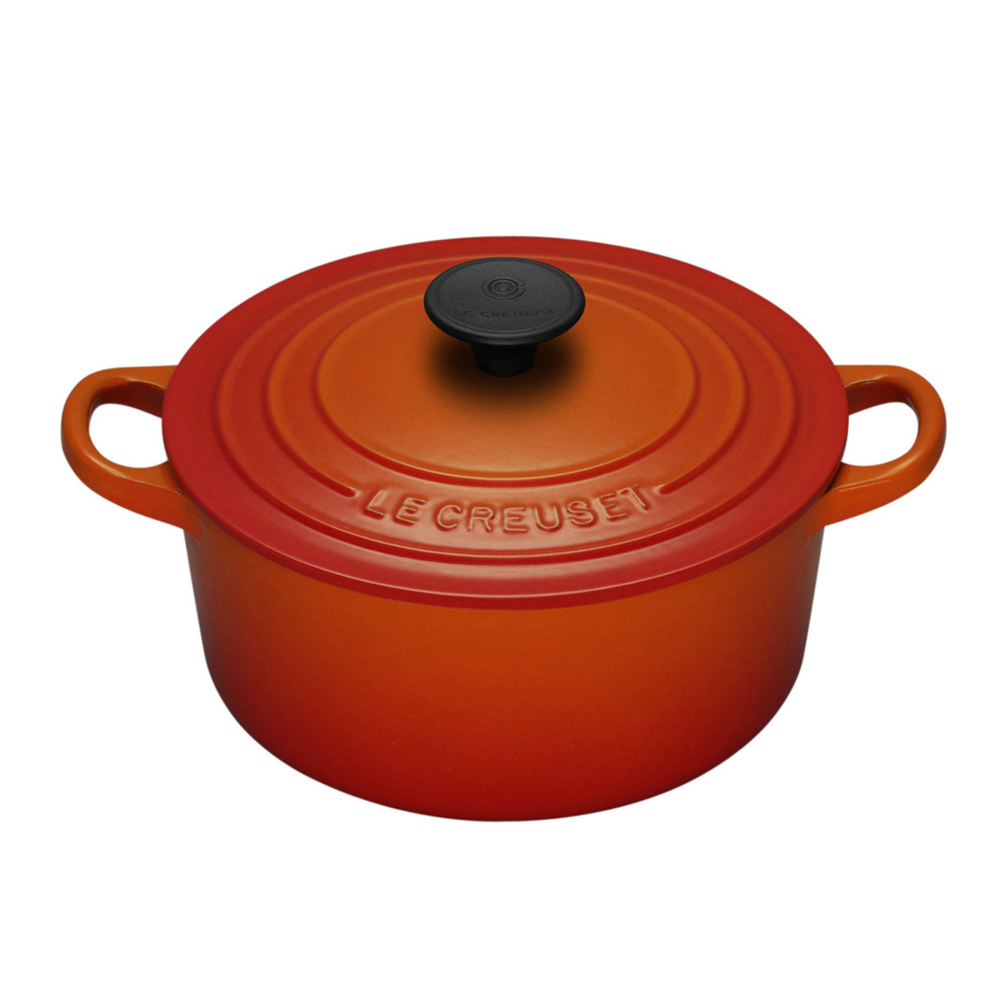
BuyMeOnce founder Tara Button told the Telegraph UK she was inspired by her Le Creuset casserole dish. She said, “‘I will have this for life–wouldn’t it be great if everything else in my kitchen was like that? You buy it once and you never have to buy it again.”

The web shop goes beyond the kitchen, featuring clothing, furniture, tools and a handful of other categories. All products are chosen for their durable construction, timeless design and repairability. On the latter point, the site also has articles and tips for making things last a lifetime or more.

Button’s concept is something we have written about many times in the past, though we call it “heirloom design.” It’s the idea of designing and consuming products capable and worthy of being handed down from one generation to the next.

The main obstacle to heirloom design becoming normal is economics: stuff cost so little money that it’s easy to rationalize buying three or four pairs of cheap shoes versus one heirloom quality pair. But this short-term thinking misses hidden expenses. Cheap stuff is cheap because manufacturers use crappy materials and construction and employ sketchy labor and environmental practices. Cheap stuff is often designed for the times, not the ages, so you are likely to want to replace it before it wears out; notice how often the simplest clothes and products are also the most expensive. Cheap stuff (and frankly, most stuff, nowadays) is not designed to be repaired. And perhaps more than anything, when we buy cheap stuff, we don’t value it; we are less likely to care for it, cherish it and even use it.

It’s heartening to see BuyMeOnce and other shops like it becoming more mainstream. People still need stuff, but with the right orientation and selection, the stuff we use can be more useful, look better and last longer.

WeLive Goes Live, Sorta

A while back we reported about WeLive, the residential arm of the coworking giant WeWork. That post gave some of the spec’s for their Crystal City project, which converted a 12 story office building outside of DC into massive complex filled with micro apartments, communal recreational and coworking spaces. Well, unbeknownst to many, WeWork was developing another project at 110 Wall Street in Manhattan’s financial district (also the site of an existing WeWork coworking space). The project will eventually house 600 folks on 20 floors. They recently announced a beta launch at the building, which will house 80 WeWork members in 45 units.

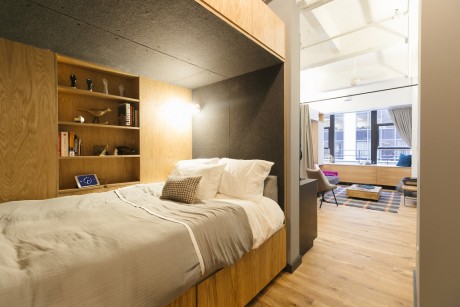
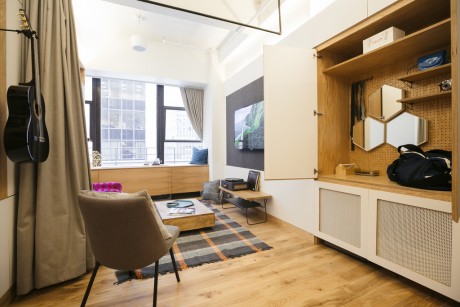
Similar to Ollie in New York, The Collective in the UK, CommonSpace in Syracuse and other such developments, WeLive (not the official name for the record) seeks to create a whole universe for its residents. The pictures released by WeWork show handsome apartments designed by ARExA Architecture, whose principal and Creative Director Darrick Borowski designed one of our favorite micro-apartments. The interior incorporates Resource Furniture space saving beds. There will be studios and one and two bedroom units. The pictured unit is a two bed studio separated by a curtain (a setup that will probably not appeal to everyone). 

Welive-second-bedroom

The private units will be supplemented by common areas on every floor. There will be social directors, who, according to Fast Company, “Will help plan Sunday-night suppers, game nights, karaoke, and fitness classes.” Additional services like wifi, cable and cleaning are also included. You could, theoretically, never have to leave the building if you so chose.

welive-dresser

The whole concept raises a somewhat thorny question: would having your coworking space share a building with your apartment be a good thing? Or might it create a somewhat insular existence, where work and and personal lives have no division, where you run into the same (somewhat homogenous) crowd day in, day out? These are somewhat academic questions–literally. What WeWork is doing is creating something akin to an academic campus, albeit with a professional twist, a model that seems to work just fine. Which is good, as WeWork sees their residential endeavors making up 21% of their revenue by 2018. 

Via Fast Company

Living Small, Riding Free

We have posted about numerous folks who have traded stationary homes for RVs. People make this choice for a variety of reasons. They might want to see the world, live a more minimal existence, reduce overhead and so on. Despite these attributes, many bristle at the idea of a roving home that depends on a fossil fuel hungry internal combustion engine.

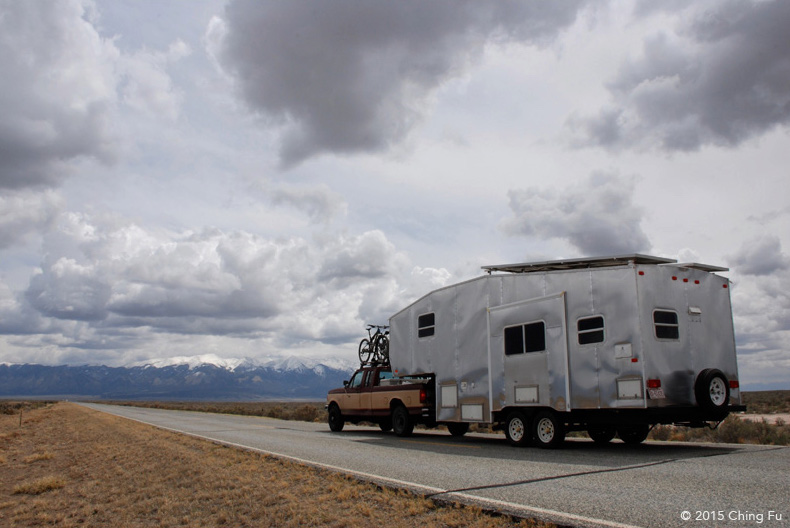
Recent fulltime RVers Ching and Jerud had similar reservations, but ultimately decided an RV was the best type of home to do what they wanted to do: live self-directed, outdoor-centered, low-overhead lives. Today’s guest post by Ching goes into some of their story: why they chose to live in an RV, the ups and downs of the experience and even how they made it work with their environmental sensibilities. Read more about their journey on Live Small Ride Free.

My desire to downsize my life from a 1,200 sq. ft. house to a 200 sq. ft. RV was driven by my love for the great outdoors and need for exploration. Yearly two-week-long vacations always ended in a blink of an eye and I felt time was becoming more and more my enemy. I didn’t want to wake up one day to realize that I was too old, too comfortable and had too many strings attached to live the life I always wanted. And I was tired of reading about other people’s adventures while daydreaming about  mine. It finally hit me that there wasn’t any reason I couldn’t live the way I wanted–traveling fulltime on the road.

Living in an RV wasn’t initially our first choice because of its carbon footprint. Yes, it’s less than living in a standard house, but the irony of traveling to America’s beautiful natural landscapes while burning fossil fuel didn’t escape us. But we realized that an RV actually best fit our needs and that we could further decrease our carbon footprint with some modifications.

livesmallridefree-veg-oil

RVs use a mix of electricity and propane to power everything inside them – from running the fridge, heater, stove, and lights, to charging cell phones and laptops. Electricity is generated either by plugging into the grid at an RV park, a diesel generator, or sometimes aftermarket solar panel additions – but propane does the majority of the work, heating the interior, the water, and cooking food. We decided to remove all of our propane appliances, go fossil fuel free and turn our RV into an all-electric rig powered totally by solar panels. On top of that we challenged ourselves even more by converting our truck – our tow vehicle – to run off of waste vegetable oil instead of diesel Sustainability was our other priority next to creating a new life of mobility and freedom.

Our new lifestyle is simpler and happier than before, but it’s also challenging. We didn’t just change the size of our home but how our home functions, which meant there was a lot we had to learn. Also, in our new life we are more aware of how we are living and what we use – I call it conscious living. We know exactly where our electricity, water, and fuel comes from and how much is available to us. Our energy has been diverted to things that are important to us rather than what’s important to society or our employers. In a sense we’ve regained control of our lives and our future, and it feels good, scary and right.

salida

The highs that we’ve had so far during our 9 months on the road: the day we rolled out of our hometown; having our RV that we spent a year rebuilding not instantaneously fall apart as we drove away; waking up to our first snowstorm in Colorado and not running out of electricity on that cold cloudy day; driving from Missoula to Seattle on nothing but waste vegetable oil; pre-dawn hike to watch the sun rise above the Cascade Mountains; racing the sunset while mountain biking in Colorado; and kayaking snow-fed lakes.

But as with all highs, there are lows to balance things out: having our truck’s brakes fail while driving up a mountain; spending three months looking for a replacement truck which halted our travels; dealing with major RV battery issues; being stuck in a truck with an old, incontinent dog with diarrhea; having my touring bike and dog trailer stolen; and the days when we just can’t find available waste vegetable oil.

A big low is our current lack of financial security. We didn’t have career backgrounds that could easily transition to a mobile setting and we chose to leave before securing new jobs. Part of the reason we are able to do this is because the cost of living isn’t very high for us thanks to our RV and truck setup. There are a wide variety of job opportunities for full-time RVers and the RV community is a great resource. We’ve given ourselves a year to figure work out and have had income from a rental property to float us while we adjust to life on the road.

Becoming a full-time RVer didn’t automatically make my life perfect and happy. But being proactive and changing my life to be structured the way I want and living my priorities has created a huge sense of calmness for me.