A Scooter for Big Kids (aka Adults)

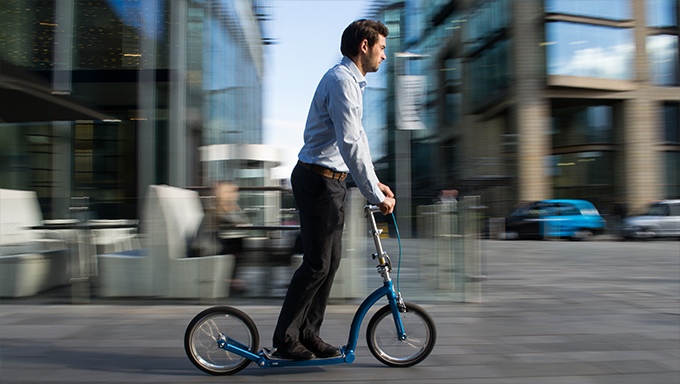
My three year old son loves his scooter as it allows him to test his daring in relative safety. I love it too. He’s able to keep pace with me as I walk down the street, and because it’s relatively small, it’s no big deal to stash it when we go in a store or something. But when I see adults using scooters, I must admit I’m prone to unfair judgment. Don’t they know scooters are for kids? But why do I think that? They allow adults to fly down the street far faster than walking, and they’re no more dangerous than bikes. Most fold up smaller than the smallest folding bike, so they’re great for stashing under a desk or something. And unlike bikes, they make no wardrobe demands–you could easily wear a suit without fear of chafing on a saddle or ripping on a chain. The new Swifty Scooter is a nice example of a high quality, compacting scooter fit for adult consumption.

swifty

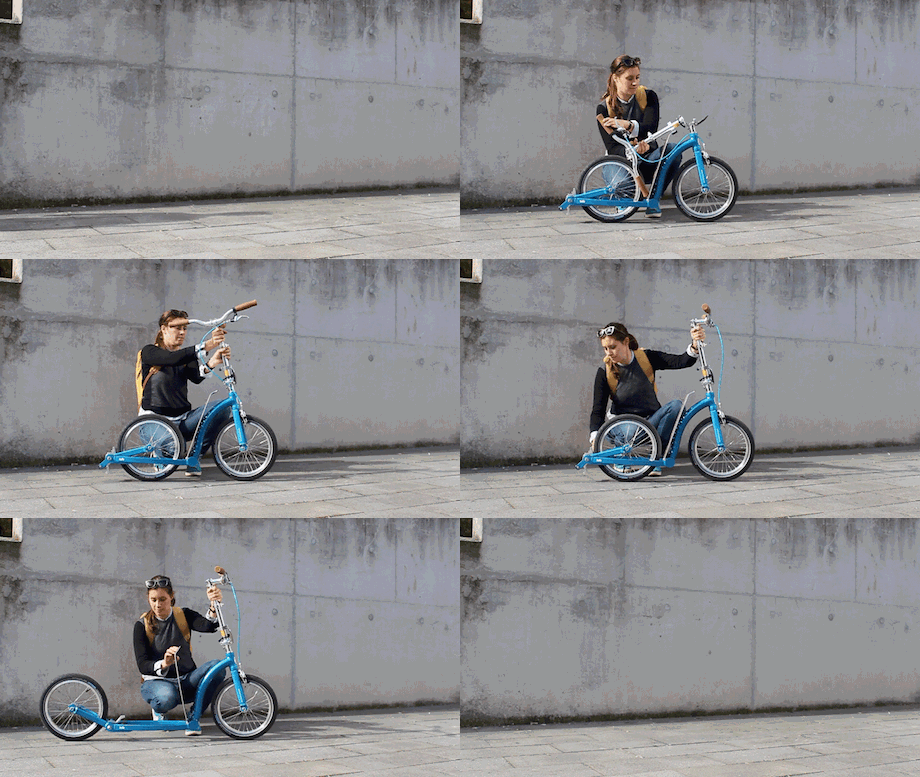
Unlike the popular Razer scooters, Swifty has large 16” wheels with proper tubed tires, giving it both stability at speed and shock absorption for safety and comfort. It has a solid aluminum frame and weighs a manageable 18 lbs for easy toting. The wheels, handlebars, stem and hand brake are solid, mid-grade bike parts, making it both durable and serviceable (there’s a rear foot brake). The scooter is easily adjustable for different height riders and opens and closes in seconds.

Swifty Scooter is currently doing a Kickstarter campaign and a $695 pledge will get you an early bird special, which is around the price of a comparable quality bike, but this is not necessarily the best way of thinking about it. Rather, is an alternative form of transit, ideal for people who want to cover relatively short distances quickly with minimal equipment. And yes, those people can be adults. 

MUJI’s Tiny Houses Show Off Huge Style

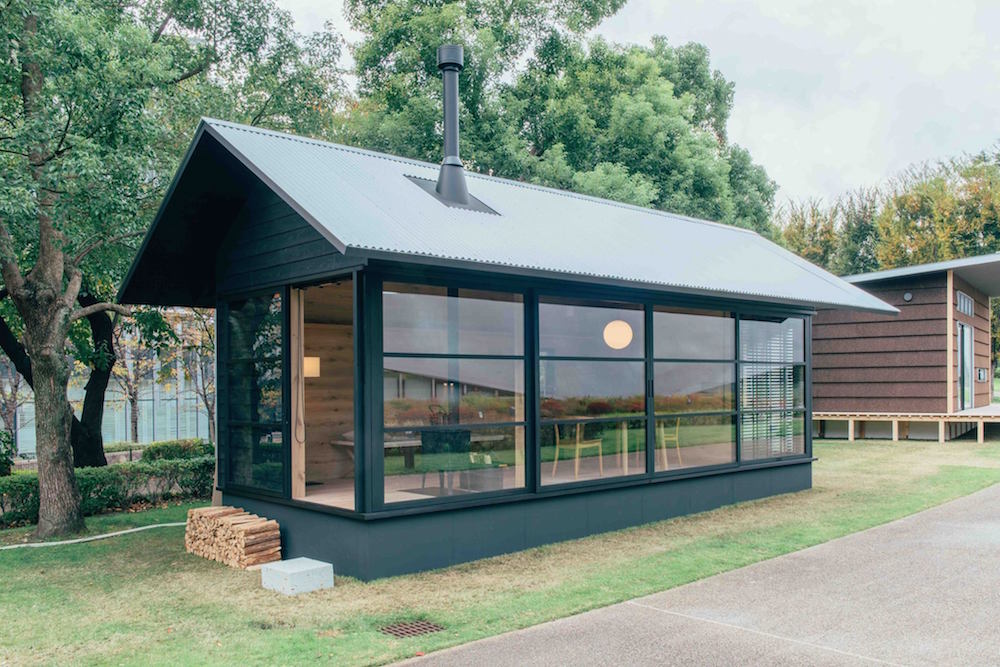
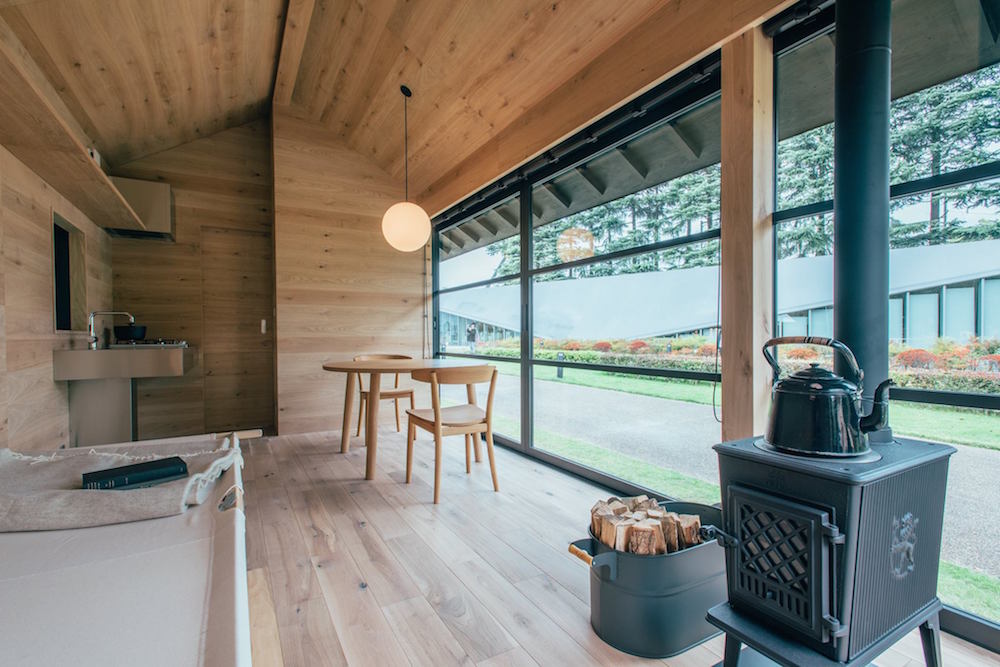
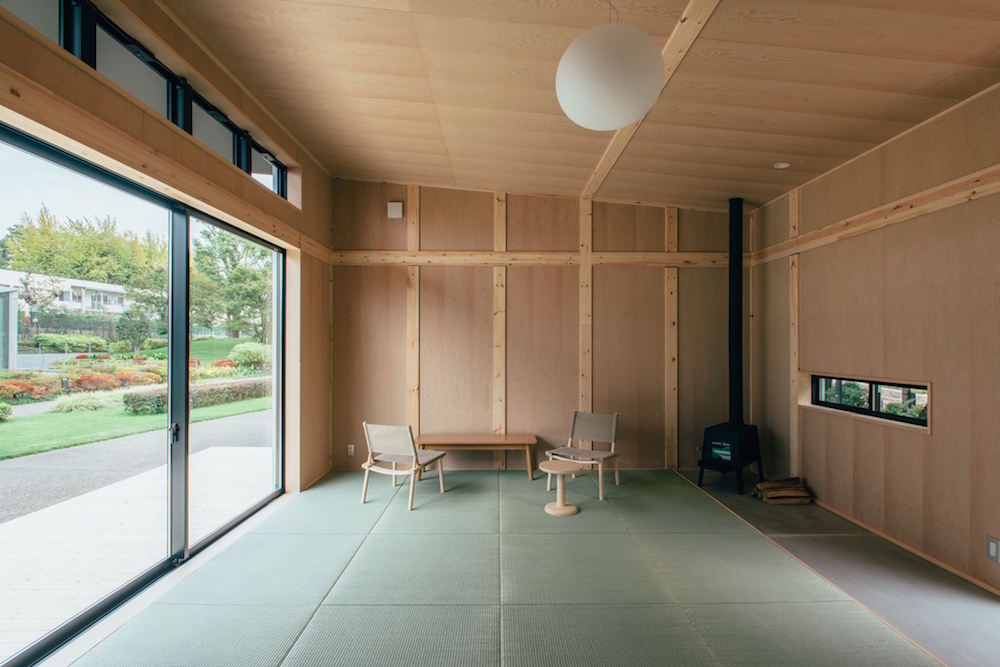
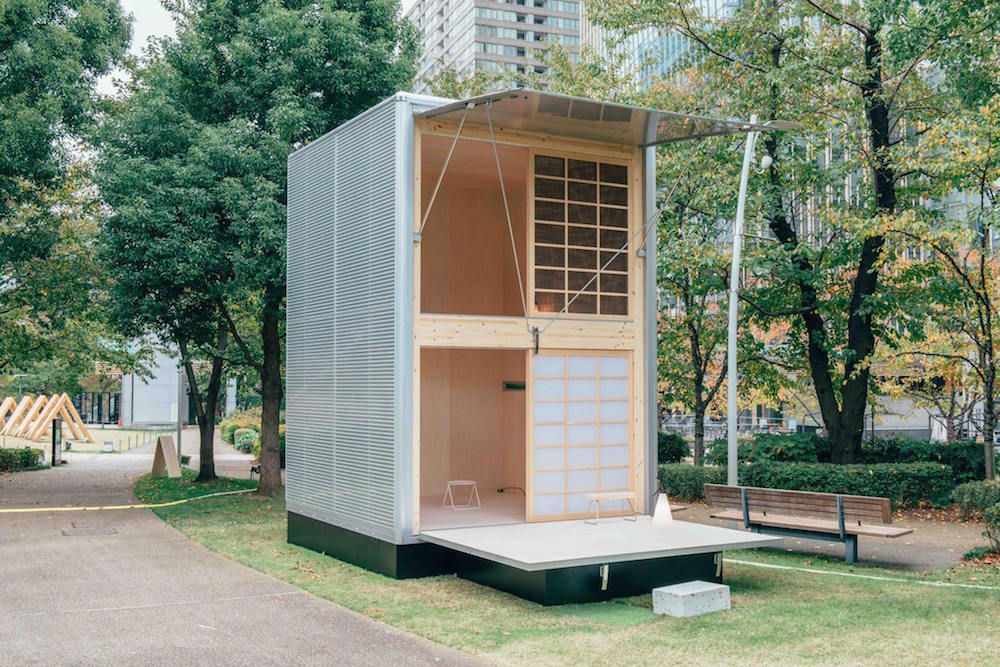
Japanese retailer MUJI’s bread and butter is simple, neutral colored, no-frills household products, furniture and the occasional piece of clothing. As part of the “Tokyo Midtown DESIGN TOUCH” event, the company is dabbling in house design, showing off three tiny houses–MUJI Huts–that embody the brand’s stark but elegant aesthetic. The size and the lack of decor aren’t a function of laziness, but the company’s exploration into “what it means to live a more sustainable lifestyle through minimalism,” according to Inhabitat.

The three prefabricated MUJI Huts were designed in partnership with leading designers Naoto Fukasawa, Jasper Morrison, and Konstantin Grcic, each of whom built their huts around a central material: wood, cork and aluminum, respectively.

The idea behind the concept is to create an easily-moved tiny house that can be set up in nature, giving harried city folks a tiny retreat to breathe. But I hope the sophistication of these designs bleed into the collective thinking of tiny house design worldwide. Too often–but not always–it seems like tiny house designers assume people want a mini Victorian home. What the MUJI Huts show is that tiny architecture and design can be every bit as sophisticated as the conventional stuff.

Via Inhabitat

It’s Okay to Buy Stuff, but Please Don’t Buy the Hype

One of today’s most powerful advertising mediums is Instagram. Companies give tons of free products and pay handsome sums to have their products featured in highly trafficked Instagram account feeds. Until a few days ago, 19 year old Australian Essena O’Neil was a coveted Instagram model. Brands would give her stuff and pay her to show off their wares to her 600K Instagram followers. But then something happened. She took down nearly all of her Instagram pics, leaving a few with captions describing the true story behind the picture. Captions included, “I didn’t pay for the [pictured] dress, took countless photos trying to look hot for Instagram, the formal made me feel incredibly alone,” and, “Took over 50 shots until I got one I thought you might like, then I edited this one selfie for ages on several apps–just so I could feel some social approval from you.”

oneil2

O’Neil has since removed virtually all trace of her social media life. She deleted her Instagram, Tumblr, Youtube and Snapchat accounts. She made several impassioned videos describing how miserable she was trying to live up to the ideal she was supposed to embody. She also started a new site called “Let’s be Gamechangers” meant to combat the malevolent influence of social media striving. There are a few other agenda items as well:

I wish to create a platform that acts to spread new age messages of conscious living, addition [sic] to technology, conversations on transparency online, minimise the celebrity culture, promote veganism, plant based nutrition, environmental awareness, social issues, gender equality, controversial art.

While some say the whole thing is a calculated stunt to get attention, I think it has the authentic messiness of a 19 year old who truly lost it and wants to affect change. To her detractors, she wrote, “This is about me feeling the need to constantly perfect and edit my life online…I’ve had these feelings about social media for ages and struggled with coming to grips with them.”

[divider]

One of the biggest drivers of consumerism is advertising. Companies want to forge an association between the highly edited, staged ideals shown in ads and the products they’re selling. Happy, smiling people drink Coca Cola. Sexy, desired guys wear Axe Body Spray. But 9 times out of 10, there is zero causal relationship between the ideal shown and product sold. Coke will not make you happy. No amount of Axe Body Spray will make a guy attractive.

When I was researching this post, I ran across a video for an advertising advocacy group that envisioned a world without advertising and ad-fueled “information.” There would be no ads in Times Square. No posters on bus stops. No Instagram feeds. The producers were clearly trying to make it look like a bleak world–one without color, options and entertainment. But my main thought was, “Boy, that would be nice.” You could see buildings unmolested by billboards. Our cityscapes would be unmarred by ugly ads. People might look up from their phones and pay attention to the environment around them. 

None of this is to say advertising as an entity should be banished. There are many useful products out there, and the companies that make those products need people to know their products exist for sale. But when advertisers imply that their humble products will lead to amazing things, it’s good to call them out and cry bollocks, which is exactly what O’Neil did.

Screenshot via Petapixel

Combating Consumerism with Kids

Today’s post was written by mother and minimalist Jen Adams.

I have 13 children. That’s not a typo–thirteen. 5 adopted, 4 biological and 4 “step”–although don’t tell them that. Our kids range in age from 5 to 23 years old. We still have 10 at home–seven in high school, two in middle school and the last in kindergarten. It. Is. Awesome. And challenging.  We live in a 1700 sq ft home with four bedrooms and two bathrooms. The bedrooms are shared–four boys in one, three girls each in the other two and my partner and I in the last. The bathrooms are always shared. We began the process of intense minimalism in February 2015 when, as parents, we couldn’t take the clutter anymore. One of the biggest foes of minimalism, especially for impressionable younger people, is the influence of consumerism.

Regardless of your income or your priorities, consumerism an issue parents have to face, and particularly so if you’re trying to maintain a minimalist home. No matter how often you succumb to “the gimmes,” someone or something will always be peddling more. Commercials on TV, ads on the internet, friends who own more “stuff,” the ability for social media to track what you look for and like–it’s never ending. Want to be thinner? Faster? Stronger? Better looking? Have more energy? Look better? There seems to be a product that will fix whatever problem you might have.

But for us, resisting the urge to give in to consumerism wasn’t just about having less stuff and saving money (those are important). We wanted to about teach our kids values. I wanted them to learn:

  • That instant gratification isn’t all its cracked up to be
  • That stuff won’t make you happy
  • That you can’t get everything you want
  • That you have to work for what you want
  • That you should prioritize what’s of value and be willing to earn it

My kids are older now and I thought I’d ask them how our journey into minimalism is going–if any of these lessons have stuck. I spoke to six of them, asking them what it’s been like growing up wearing hand me downs, shopping at thrift store, having me bake their birthday cakes at home, making all their Halloween costumes and Christmas pajamas and being regularly told no when they asked for things they had to have. Here’s what they said:

gabi

Gabi–15 years old: “It sucks being told no sometimes when you want something, but it taught me I don’t have to get everything I want. I like the homemade Halloween costumes and birthday cakes from scratch because it means more and there are memories. Hand me downs are pretty cute clothes. Thrift stores means stuff that’s expensive is cheap and we can get it, so it’s pretty cool. I don’t mind getting rid of things because I don’t use things so my mom minimizing doesn’t bother me. Our house isn’t crowded like it was before we minimized and that feels better. “

alana

Alana–17 years old:  “[Sighs] I never did get that pillow pet I wanted” [She then proceeded to sing the commercial–be thankful I didn’t take a video.] “It taught me that having a few sentimental things is more important than having a lot of things. It’s more meaningful. It was frustrating not getting things when I was younger because other kids had stuff that I didn’t and it seemed like it was cool. I felt like I never got any of the cool toys. Now I’m really glad. I’m not an entitled, stuck up snob and I learned to be more creative.”

taylor

Taylor–16 years old: “It was nice because I didn’t have that privileged mindset that I’ll have everything I want. I learned how to work for things and earn them. Homemade Halloween costumes, Christmas pj’s and birthday cakes. It meant a lot that my mom took the time to do that stuff.”

olivia

Olivia–19 years old: “It was just how I was raised. If you don’t know any different you don’t realize there is anything different. Homemade birthday cakes are always better than store bought anything. Mom made things so there was good stuff in it and we were allowed to lick the bowl which always made it better, plus we got to pick the cake we wanted from pictures. We still had a lot. I never felt like I didn’t have enough. The only thing I remember wanting to do and being told no was wearing a belly shirt. I was really mad. It was a green, waffle material. That kind of sucked. The want vs need thing–I make a list of what I need first and then things I want.  So I learned to know the difference between wants and necessities. That’s great for planning ahead and not splurging on things I don’t actually need.”

kezia

Kezia–13 years old:  “I don’t like being told no. Mainly because I’m one of those people that want everything. It taught me that I didn’t need things just because I wanted them.  I didn’t mind hand me downs or going to the thrift store because the clothes were cute. The one thing I don’t like is that they aren’t always ‘in’ and fashionable but I learned to make them fashionable. I like the homemade costumes so we could make them and no one else had them. I liked the homemade cakes because they were made with love. One of the biggest things is that we learned to help each other because we did things together. It brought us closer together.”

ashlea

Ashlea–15 years old:  “It sucked at the time, but looking at how other families are who have spoiled kids, [has] made me appreciate less consumerism as I got older. I didn’t like getting hand me downs but I learned I’d rather have a few nicer things than a lot of things.”

[divider]

The bottom line is who the hell cares how you’re raising your kids. People–even strangers–like to offer advice on parenting, but we all parent in dynamically differing ways. You must do what works for you. For us, living with less stuff, not buying everything the TV tells us to, buying used when we can, making stuff ourselves and so on, works. While our kids might not always be happy when we tell them that they can’t have what they want, as they’ve gotten older, they seem to appreciate that we are doing it because it works for the family. And if I do say, in spite of not getting everything they want–or because they don’t get everything they want–they’re doing pretty okay. 

Read more about from Jen and her family’s adventures at Mom’s Running It

A Desk for the Lightweight Worker

The Ergotron Hub cabinet/desk is a slick little piece of furniture if you’re looking for an attractive, lightweight workstation. It comes in two varieties with two sizes: the Hub27 measures 27.3″ w × 20.3″ h and the Hub24 measures 24.8″ w × 16.5″ h. Both units are only 3” deep when closed, so they barely stick out of the wall. 3” is plenty to stow a laptop, phone, tablet, essential stationary and a few pieces of paper (which is all you really want anyway, am I right?).

Hub27-LS-dry-erase

The glass desktop, when closed, is lockable and doubles as a dry erase board. It is rated to hold 25 lbs, but a Ergotron rep told me, unofficially, that this is very conservative and that it can accommodate up to 100 lbs, though I wouldn’t want to try it, nor could I see a possible reason to load it with so much weight. The desk height can also be vertically adjusted several inches to accommodate different user-heights. Depending on where it’s mounted, the Hubs can serve as a sitting or standing desk.

Hub27-LS-lever

What’s coolest to me about the Hubs are they are responding to the changing nature of how people use desks. Most of today’s desks are designed around filing cabinets, stationery storage, printers and CPUs with monitors. While many people still use these things, more and more people (like me) only need a place to use and store our laptops and a few documents. For us, a minimal desk like the Hub is pretty perfect.

The Hub27 retails for $350 and has a heavy duty steel frame. The Hub24 is $200 and features a high quality plastic frame. Go to Ergotron Home’s website for more info.

The Hills are Alive with the Sound of Innovation

Started in 2008, Summit Series has established itself as one of the world’s premier events focusing on entrepreneurship, addressing global issues and support artistic achievement. Past speakers include Richard Branson, Bill Clinton and Tony Hsieh. Summit Series is known for its amazing settings; past series have been held in such places as a ship cruising the Bahamas and Squaw Valley.

powdermountain

In 2013, Summit, the company who runs the series, partnered with venture capitalist Greg Mauro to purchase Power Mountain, America’s largest ski area, located in Eden, Utah. The intention was to create a permanent home built around the ethos that their community and organization had come to embody and promote. In an effort to create this home, called Summit Powder Mountain, they are developing a village along with a sustainable residential community–think of a smaller version of Telluride. Mauro, now Chairman of Summit Powder Mountain, commented, “We wanted to stop the ‘McMansionization’ of mountain towns that has reached absurd levels–48,000 sq ft houses in some areas–and focus on smaller homes and cabins that preserve the national park feel that exists here. So we limited the number and size of our largest mountain homes to 500 units with a maximum size of 4500 sq ft above ground respectively, and are complementing these with small cabins from 360 to 1500 sq ft.” Working in conjunction with Summit’s architects, LifeEdited was called upon to conceive some of these cabin residences.

INT04INT02

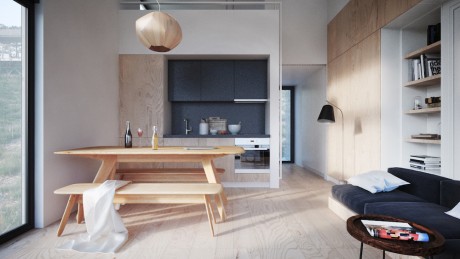
While the terms “compact” and “ski lodge” tend to be mutually exclusive, that’s exactly what we’ve done with the Overlook 360 design. The unit is a split level studio-style dwelling with a main room containing the kitchen, dining area and lounge. With the help of a hiding wall bed/sofa, the living room turns into the master bedroom at night. Above the main room is a loft area, creating an alternative place to hang out. Overlook 360 uses large windows and simple materials to keep the interior bright and open. Built-in storage, the transforming bed and minimal furniture make the space feel larger than its small footprint might suggest. There is a large deck and green roof to exploit and blend into the area’s amazing natural beauty.  

EXT02

One of Powder Mountain’s design objectives is to make its architecture “subservient to the natural landscape,” and one of the easiest ways of doing that is to make the architecture smaller–less home equals more natural habitat. Additionally, Overlook 360 will neither be connected by roads nor have parking spots connected to the cabins. Parking will be in nearby “parking barns” and everything will be accessed via a network of paths. By doing this, the homes will enhance their natural settings and possess a retreat-like quality to the district they inhabit.

Overlook 360, as well as multiple neighborhoods and districts will be developed in the next couple years. For more information, visit Summit Powder Mountain’s website.

Image © LifeEdited 2015

Dorm Living for Grown Ups

In the mid-aughts, Professor and architect Hector Perez of Woodbury University pooled together several faculty members to purchase lots of land in the Barrio Logan neighborhood in San Diego. Their hope was to create an extension to the school’s campus. But a variety of circumstances–crashing economies, the school’s decision to move to another part of town–derailed the plan. Rather than selling the land, the group decided to create something they thought would support the community. The result is a building with compact units that mix the privacy of a conventional apartment with the socially porous infrastructure of campus living.

7048hector_barriologan7022hector_barriologan

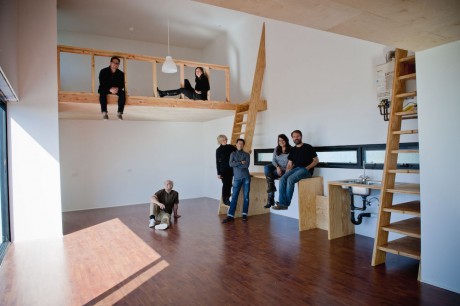
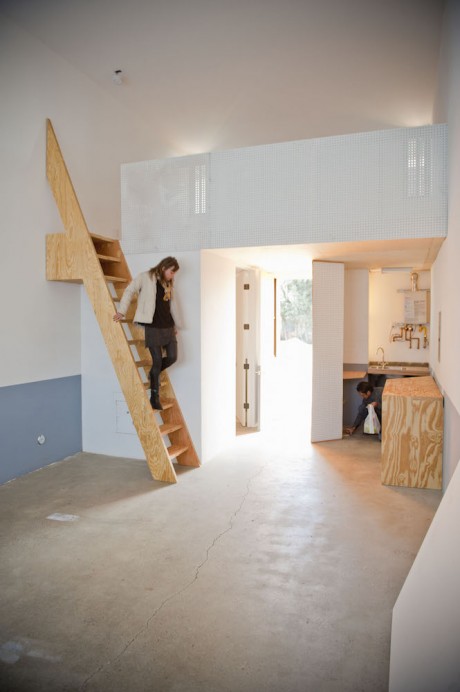
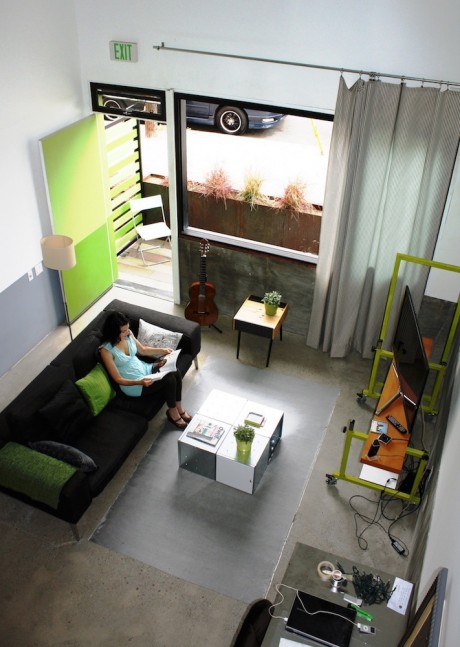
The building, dubbed La Esquina, has a total of eight live/work units making up only 4K sq ft of floorspace across two levels. The units, which are basically artist lofts with very high ceilings, range from 450 to 595 sq ft. They have a large main room that adjoins the kitchen and bathroom, above which is a sleeping/work loft. Some units feature a second loft. First floor units have street-level patios accessed by large sliding glass doors, making good use of San Diego’s weather. The upper level units have both shared terraces and their own private patio spaces.

La Esquina unit5a

The building was built for $130 a square foot, which is about $50 less than San Diego’s average cost for building multi-family homes. Perez and co achieved this by using simple, inexpensive materials such as board-formed concrete walls and plywood paneling. The interiors have a cool industrial chic look that is brightened up well by the ample windows.

IMG_0256

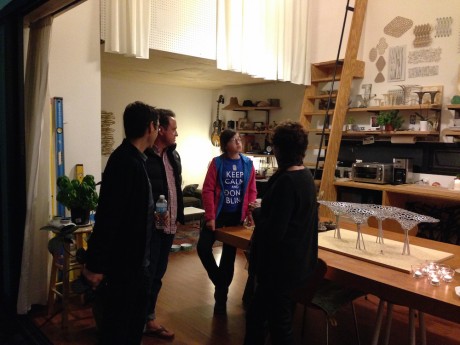
The tenants of the La Esquina are all current students, graduates, and instructors from Woodbury. According to a Dwell Magazine article about the building, tenants “meander into one another’s spaces to share meals, to collaborate, or to spontaneously gather in the afternoon,” making it ripe for creative collaborations.

IMG_9860

Many people speak of their days living in college dorms as some of their happiest. What dorms gave up in space and privacy was made up by built in social programming and conviviality. But as years progress, personalities and habits are forged, and people develop preferences as to how they want to live. The charms of shared living are supplanted by the desire for more control of their living environments. What’s great about La Esquina, from what I can see, is it retains many of the charms and infrastructural characteristics of dorm life, while providing the space and autonomy adults crave, all in a compact, efficient format. 

REI Is Making Black Friday a Bit Brighter

There is no single day that better represents the scourge of compulsive, compulsory consumption than Black Friday–historically the biggest shopping day of the year. The day compels many to camp out in front of stores in frigid temperatures to nab limited time offers on retail goods; it sends workers to work extra long hours that would otherwise be spent partaking in post-thanksgiving revelry; and it brings out some pretty nasty human behavior: in the last decade, seven people have died and 98 have been injured in Black Friday related shopping incidents. These are not people shopping for life-saving serums–these are people pursuing deals on flatscreen TVs and remote control cars for their kids. Well, outdoor retailer REI is taking a stand against this insanity. Its #Optoutside campaign will close all 143 REI stores on this most lucrative shopping day.

Not only will REI stores be closed, but the company will give its employees a paid day off to spend outside. REI president and CEO Jerry Stritzke says this about the campaign:

For 76 years, our co-op has been dedicated to one thing and one thing only: a life outdoors…We believe that being outside makes our lives better. And Black Friday is the perfect time to remind ourselves of this essential truth…We’re a different kind of company—and while the rest of the world is fighting it out in the aisles, we’ll be spending our day a little differently. We’re choosing to opt outside, and want you to come with us.

The cynic in me wants to say it’s just a big PR stunt to get them attention (I’m writing about it, aren’t I?), but the other part of me thinks it’s pretty cool. While the prevailing retail culture is still very much set up to encourage consumption at all cost, there are signs of a new culture emerging. Whether it’s Patagonia, Outlier, Zady or REI, we are starting to see companies that consider their social and environmental impacts. They are creating a new way to buy the stuff we actually need. This new way might require a little bigger initial investment and it might not be as convenient (you’ll have to wait until November 28th to shop at REI…or shop online), but it might make us a bit more conscious and careful of how and why we consume.

HT Sarah L

See How this Family of 7 (Happily) Shares a 1K Sq Ft Vancouver Condo

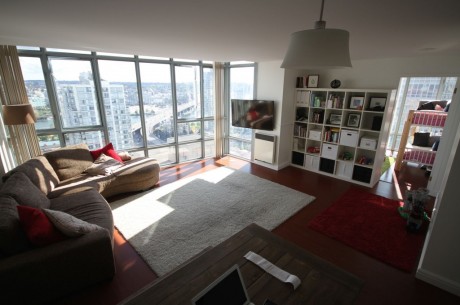
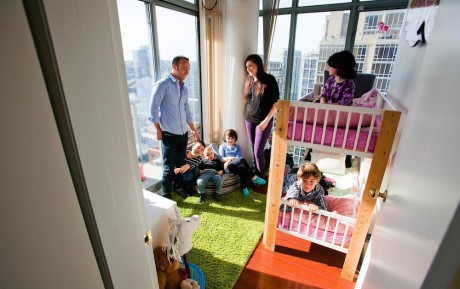
Living with five kids under one roof can seem like a daunting proposition for many. But that’s exactly what Adrian Crook is doing. But he is not raising the children–who range in ages 3 to 9–in some huge suburban fortress. Crook, his girlfriend and kids are happily living together in a cozy 1050 sq ft condo in downtown Vancouver.

5kids1condo-living-empty

Crook’s home is not an unfortunate layover until he finds a larger spot. It is a conscious choice. As he explains in an interview with Buzzbuzzhome News, when he and his ex-wife had one child and another on the way, they moved to suburban North Vancouver “because that’s what you’re supposed to do when there’s another kid on the way.” But he hated living in the car-dominated landscape. “In theory you could still walk places but no one was ever on the streets,” he said in the interview. “Cars were flying by and there wasn’t enough density to make it interesting.”

Compounding his desire to walk places and his aversion to driving, Crook is no great fan of single family housing from a sustainability perspective. “Virtually everyone I know who lives in the suburbs drives everywhere–you end up driving between these little islands of activities. Once you get in that mode, you don’t question it.” This way of life, as we’ve looked at in the past, and Crook is quick to point out, is far more resource intensive than living in an walkable, urban setting.

Following his divorce, Crook, a professional video game designer, moved back downtown with nothing. His current place is a two bedroom condo on the 29th floor and is only filled with stuff that is absolutely needed.

5kids1condo-bedroom-15kids1condo-bedroom-2

Crook and his girlfriend sleep in one bedroom, three kids take up in another and the remaining two sleep in a small, separate den. He keeps the place minimally decorated and doesn’t “own a bunch of crap.” Kids toys are carefully curated. He avoids “single-purpose or large plastic toys that can’t be reconfigured in an imaginative way or stored easily.” All possessions are subject to regular donation and trash runs.

5kids1condo-vancouver

In addition to the walkability, Crook sees myriad benefits to his setup. The tight quarters engender a closeness between the children. Urban life exposes them to a far more expansive worldview than the one they might have in the burbs. And his army of five can get the space clean in 15 minutes. 

Another big benefit Crook sees stems from his choice to rent. Despite Vancouver having some of the highest property values in North America, Crook said that condo values haven’t matched single family home values, which are through the roof. As such, he only pays $2200 a month in rent. Renting frees him from the homeowner’s frequent desire to constantly improve his or her place. He also likes that when things go wrong, he can just call his building manager.

Talking about what he’ll do when the children gets older, he says, “I expect that we all learn how to live together and if my children get to an age where they don’t want to always have to be in the same space, well then by all means go to the park or a coffee shop! They’re a bit young for that now but we don’t currently have any issues with living in the same space.” He stresses that kids know what’s put in front of them. If they’re exposed to huge homes in the suburbs where you have to drive everywhere, that’s normal. If they’re exposed to compact homes in the city where you have to walk or take public transit everywhere, that’s normal too.

He listed one other funny benefit to raising children in a small space. He wonders if one reason many children are not leaving their parents’ homes–or returning to them–as adults is because the homes are too comfortable. He says, “If my kids want more privacy, they’re going to have to move out [laughs].”

Find out more about Crook and his brood at his blog 5kids1condo.com.

HT to Ron B.